
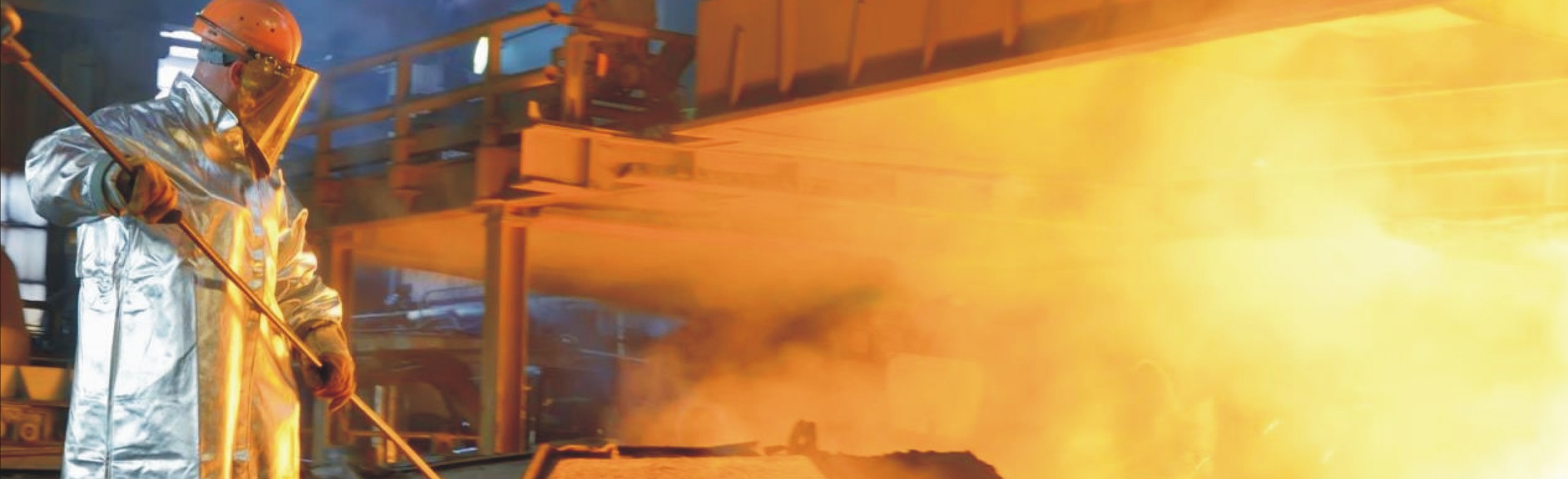
Metal powder atomization is the process of breaking a molten metal stream into fine droplets that solidify into powder particles. The medium used to disintegrate the melt -- water, inert gas or air -- fundamentally determines the characteristics of the resulting powder. Understanding these differences is essential for specifying the right powder for your application.
MEPOSO operates water, gas and air atomization plants, giving us the flexibility to produce metal powders with a wide range of particle shapes, sizes and properties. In this article, we compare the three main atomization techniques and help you decide which process best suits your needs.
Water Atomization
Water atomization uses high-pressure water jets to break up a stream of molten metal. The rapid cooling rate and the mechanical force of the water produce particles with irregular, angular morphologies. This is the most widely used atomization method worldwide, accounting for the majority of metal powder production by volume.
Key Characteristics
- Particle shape: Irregular, angular, sometimes ligamental. Surfaces are rough with many asperities that promote mechanical interlocking during compaction.
- Particle size range: Typically 20-500 microns, with good control over the distribution through adjustment of water pressure, melt superheat and nozzle geometry.
- Apparent density: Lower than gas-atomized powders (typically 2.5-3.5 g/cm³ for copper) due to irregular shape and internal porosity.
- Oxygen content: Generally higher than gas-atomized powders due to direct contact with water. Reduction annealing can lower oxygen levels when required.
- Cost: Lower production cost per kilogram compared to gas atomization, making it the economical choice for high-volume applications.
Best Applications
Water-atomized powders excel in powder metallurgy press-and-sinter operations where green strength is critical. The irregular particle shape provides excellent interlocking during compaction, resulting in strong green parts that can be handled before sintering. Typical applications include sintered bearings, structural PM components, friction materials and diamond tool matrices.
Gas Atomization
Gas atomization uses high-pressure inert gas (typically nitrogen or argon) to break up the molten metal stream. The lower cooling rate and the absence of oxidising media produce particles with spherical morphologies and clean surfaces.
Key Characteristics
- Particle shape: Highly spherical with smooth surfaces. Some satellite particles may be present, where smaller particles are bonded to larger ones.
- Particle size range: Typically 10-300 microns. Tighter distributions can be achieved through classification.
- Apparent density: Higher than water-atomized powders (typically 4.5-5.2 g/cm³ for copper) due to spherical shape and dense internal structure.
- Oxygen content: Significantly lower than water-atomized powders, as the inert gas atmosphere prevents oxidation during atomization.
- Cost: Higher production cost due to the use of inert gas and generally lower yields of fine fractions.
Best Applications
Gas-atomized powders are the preferred choice for applications demanding excellent flowability, high packing density and low oxygen content. These include additive manufacturing (SLM, EBM, DED), metal injection moulding (MIM), brazing pastes, thermal spray coatings and high-performance sintered components where maximum density is required.
Air Atomization
Air atomization is a variant that uses compressed air instead of inert gas or water. It is primarily used for metals with lower melting points, such as tin, lead and zinc, where the risk of excessive oxidation is manageable and the lower energy cost of compressed air provides economic advantages.
Key Characteristics
- Particle shape: Intermediate between water and gas atomized -- generally rounded but not perfectly spherical. Some elongated and tear-drop shapes are common.
- Oxygen content: Higher than gas atomization but acceptable for low-melting-point metals where oxide layers are less problematic.
- Cost: Lower than gas atomization, making it suitable for price-sensitive applications.
Side-by-Side Comparison
| Property | Water Atomized | Gas Atomized | Air Atomized |
|---|---|---|---|
| Particle Shape | Irregular, angular | Spherical | Rounded, irregular |
| Apparent Density | Low-Medium | High | Medium |
| Flowability | Poor-Moderate | Excellent | Moderate |
| Green Strength | Excellent | Low | Moderate |
| Oxygen Content | Higher | Very Low | Moderate |
| Production Cost | Lower | Higher | Medium |
| Typical Metals | Cu, CuSn, CuZn, Fe | Cu, CuSn, Ni, Co | Sn, Pb, Zn |
How to Choose the Right Process
The choice between water, gas and air atomization depends on your application requirements:
- If you need green strength for press-and-sinter operations: choose water-atomized powder. The irregular particles provide the mechanical interlocking needed for strong green compacts.
- If you need flowability for additive manufacturing or MIM: choose gas-atomized powder. Spherical particles flow uniformly and pack densely.
- If you need brazing paste with consistent rheology: choose gas-atomized powder. Spherical particles provide predictable paste behaviour.
- If you are working with tin, lead or zinc: air atomization offers the best balance of cost and quality for these low-melting-point metals.
- If cost is a primary concern for high-volume PM: water atomization provides the most economical solution without compromising sintering performance.
MEPOSO: All Three Processes Under One Roof
MEPOSO is one of the few metal powder manufacturers offering all three atomization technologies. Our production facility includes dedicated water, gas and air atomization lines, allowing us to produce the exact powder characteristics your application demands. From irregular copper for PM bearings to spherical bronze for brazing to air-atomized tin for soldering, our product range covers the full spectrum.
Our technical team can advise you on which atomization process is best suited to your specific application, and we can produce custom grades with tailored particle size distributions and compositions.
Contact MEPOSO to discuss your atomization requirements and request samples.