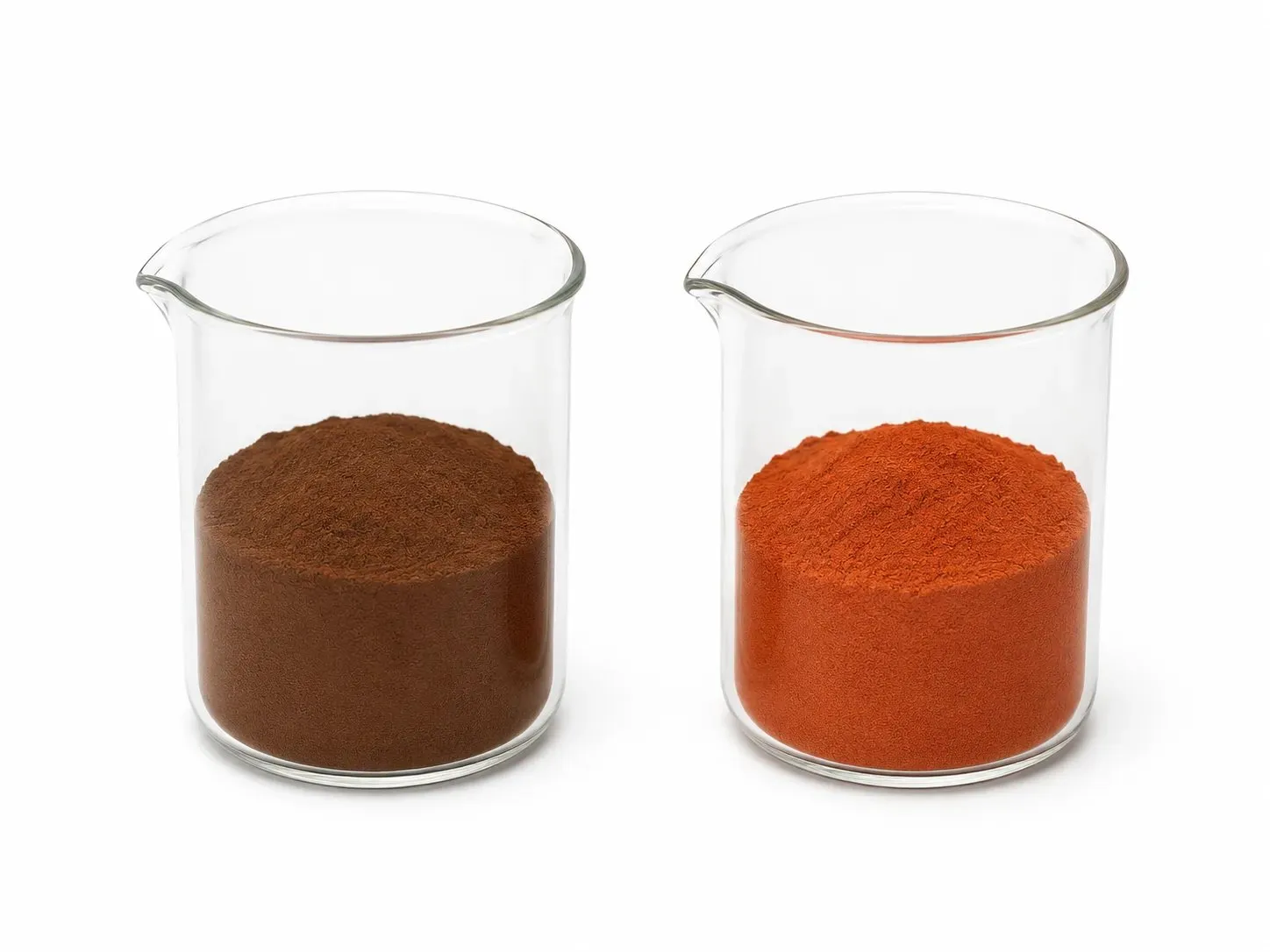
Polytetrafluorethylen (PTFE) wird wegen seiner aussergewoehnlichen chemischen Inertheit, seines niedrigen Reibungskoeffizienten und seines breiten Betriebstemperaturbereichs geschaetzt. Ungefuelltes PTFE weist jedoch erhebliche Einschraenkungen fuer technische Anwendungen auf: schlechte Waermeleitfaehigkeit (nur 0,25 W/mK), hohes Kriechen unter Dauerlast und relativ schnellen Verschleiss unter Gleitkontakt. Bronzepulver — typischerweise gaszerstaeubt CuSn10 im Bereich 10-45 Mikrometer — ist einer der bewaehrtesten und wirksamsten Fuellstoffe zur Ueberwindung dieser Einschraenkungen. Mit Bronze gefuellte PTFE-Compounds werden in Lagern, Dichtungen, Kolbenringen, Ventilsitzen und Fuehrungsringen in der chemischen Verarbeitung, der Lebensmittel- und Getraenkeindustrie, der Pharmazie, der Oel- und Gasindustrie und im allgemeinen Maschinenbau eingesetzt.
Why Bronze Is the Preferred PTFE Filler for Bearing Applications
Bronz toz improves PTFE performans in three critical areas simultaneously. First, thermal conductivity: bronz-filled PTFE (typically 40-60% by weight) achieves thermal conductivity of 0.8-1.2 W/mK - a 3-5x improvement over unfilled PTFE. This allows heat generated by friction to dissipate through the bearing wall rather than accumulating at the sliding surface, preventing thermal degradation and extending service life. Second, creep resistance: bronz particles act as a rigid skeleton within the PTFE matrix, dramatically reducing cold flow under sustained compressive load. This is essential for dimensional stability in seal and bearing uygulamas where tight tolerances must be maintained over years of service. Third, wear resistance: the bronz particles carry a proportion of the contact load, reducing the wear rate of the PTFE matrix by factors of 100-1000x compared to unfilled PTFE, depending on operating conditions. MEPOSO tedarik eder CuSn10 bronz toz specifically graded for PTFE compound production, with controlled particle size distribution, consistent tin content and low oxide levels.
Particle Size and Morphology Requirements for PTFE Compounding
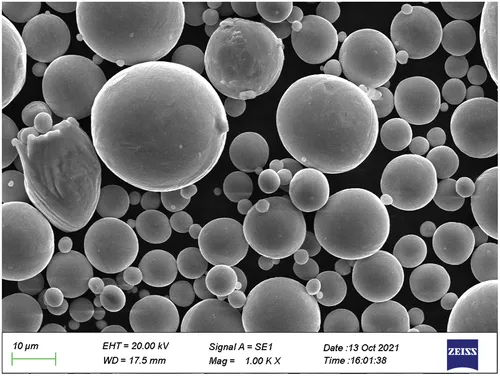
The particle size distribution of the bronz filler has a direct impact on compound processability and final part performans. Particles that are too coarse (above 75 micrometres) create stress concentration points in the PTFE matrix, can damage the counterface in bearing uygulamas, and produce surface roughness that increases friction. Particles that are too fine (below 5 micrometres) tend to agglomerate, making uniform distribution in the PTFE difficult and creating localised filler-rich zones that can initiate cracks under cyclic loading. The optimal range for most PTFE bearing and seal uygulamas is D50 of 15-25 micrometres with D90 below 45 micrometres. Spheroidal gas-atomised particles are preferred over irregular water-atomised particles because they distribute more uniformly in the PTFE matrix, produce lower internal stress in the compacted preform, and result in more consistent mechanical properties in the finished part.
Bronze Loading Levels and Their Effect on Properties
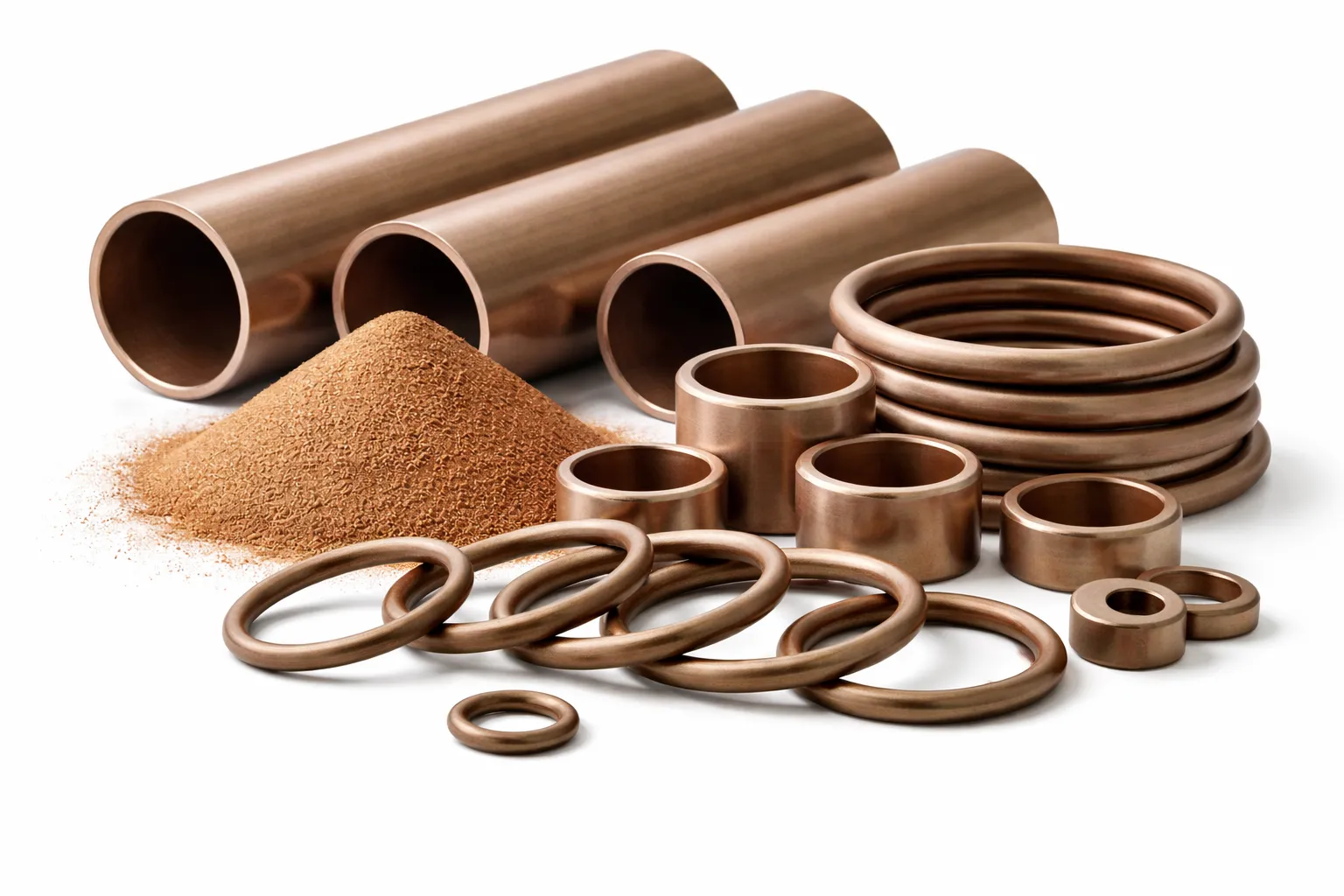
The proportion of bronz toz in the PTFE compound determines the balance between improved mechanical properties and retained chemical/friction characteristics. At 15-25% bronz loading, the compound maintains good chemical resistance and a relatively low friction coefficient while gaining modest improvements in thermal conductivity and creep resistance. This range is common for chemical processing seals and food-grade uygulamas. At 40-60% bronz loading, thermal conductivity and mechanical strength increase substantially, making the compound suitable for heavy-duty bearings, piston rings and structural components. However, the friction coefficient rises and chemical resistance decreases as more bronz surface is exposed to the environment. Above 60% loading, the compound becomes increasingly metallic in character and may lose the key PTFE advantages. MEPOSO sağlar uygulama-specific guidance on optimal loading levels based on the end-use requirements.
MEPOSO Bronze Powder for PTFE Applications
MEPOSO S.r.l. manufactures CuSn10 and CuSn8 bronz tozs specifically optimised for PTFE compound production. Our bronz tozs are gas-atomised for spheroidal morphology, graded to tight particle size specifications (typically -45 micrometres with controlled D50), and produced with consistent tin content verified by XRF analysis on every batch. Low oxide content is maintained through controlled atomisation atmosphere and proper storage, ensuring clean particle surfaces for optimal bonding with the PTFE matrix. Every production batch is accompanied by certificate of analysis, particle size distribution report and safety data sheet. MEPOSO ile iletişime geçin to discuss your PTFE compounding requirements and request technical samples.
Contact MEPOSO for CuSn10 bronze powder for PTFE compounds, technical data sheets and application guidance.