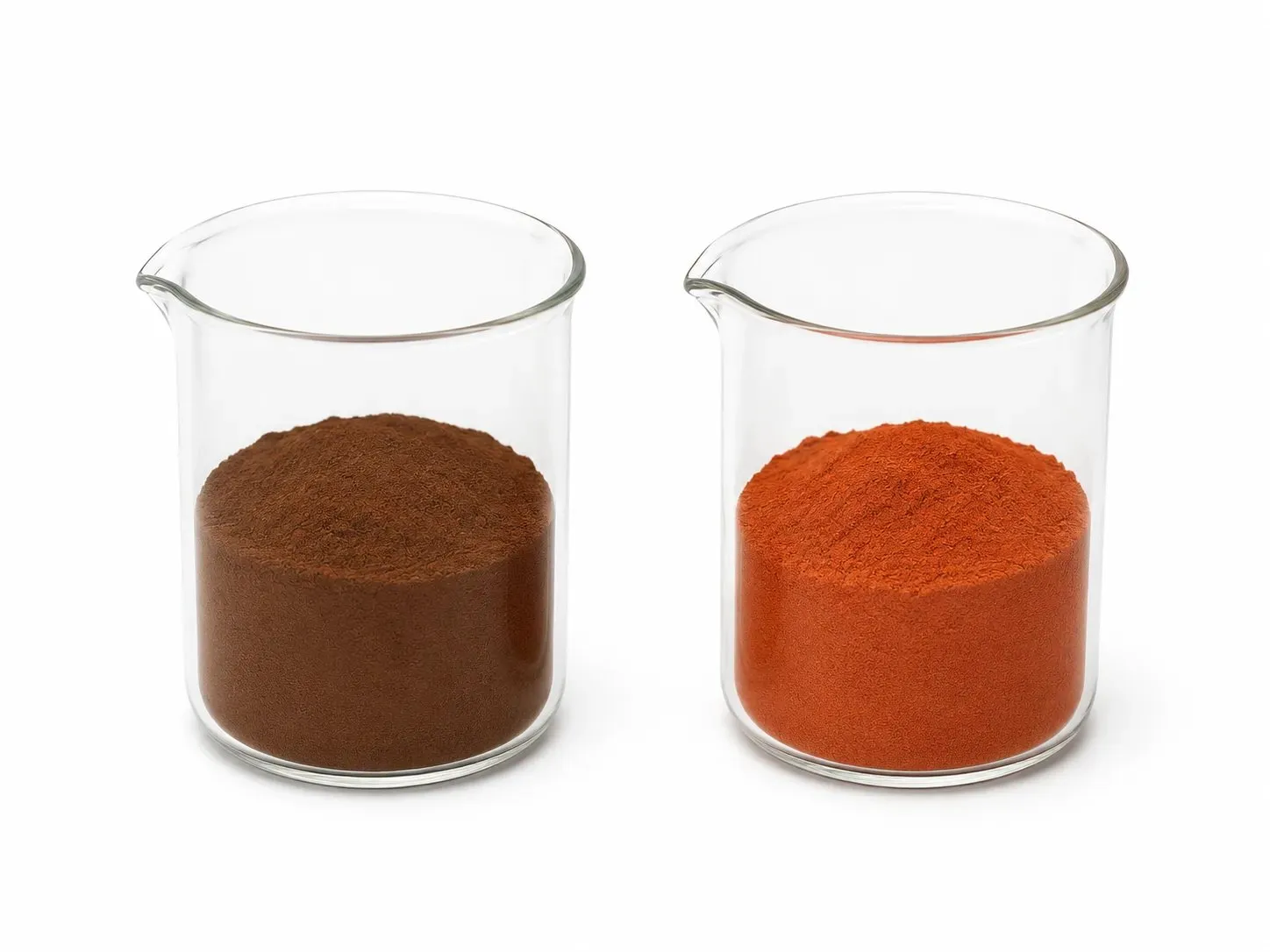
Sintered brass filters are porous metal elements produced by pressing and sintering brass powder (typically CuZn30 or CuZn40 compositions) to create a controlled pore structure that physically traps particulate contaminants while allowing fluid to pass through. Unlike disposable paper or polymer filters, sintered brass filters are permanent, cleanable and reusable - they can be backflushed, chemically cleaned or ultrasonically cleaned and returned to service thousands of times. The copper-zinc alloy provides inherent antimicrobial properties (the oligodynamic effect) that suppress bacterial growth on and within the filter element, making brass particularly suitable for potable water and food-processing filtration where microbial contamination must be minimised.
Pore Structure Control Through Powder Selection
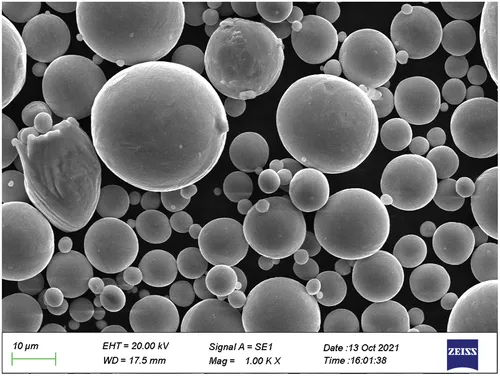
The pore size and permeability of a sintered brass filter are primarily determined by the particle size distribution of the starting powder and the sintering conditions. Coarser powders (100-250 micrometres) produce filters with larger pores (40-100 micrometres) suitable for coarse prefiltration. Finer powders (20-75 micrometres) produce tighter pore structures (5-25 micrometres) for more demanding filtration requirements. The particle morphology also matters: spherical gas-atomised particles pack more uniformly than irregular water-atomised particles, producing more consistent pore sizes and more predictable flow characteristics. MEPOSO supplies brass powder in multiple particle size grades specifically characterised for sintered filter production, with controlled morphology and documented pore-size correlation data.
Dezincification Resistance and Material Selection
Dezincification is a form of selective corrosion in which zinc is preferentially leached from the brass alloy, leaving behind a porous, weak copper-rich structure. This is a critical concern for brass filters used in water treatment, particularly with aggressive water chemistries (low pH, high chloride, warm temperatures). CuZn30 (70% copper, 30% zinc) offers better dezincification resistance than higher-zinc alloys and is the standard choice for most water filtration applications. For particularly aggressive environments, low-zinc grades or arsenical brass may be specified. The quality of the starting powder affects dezincification resistance: homogeneous alloy distribution within each particle (achievable through gas atomisation of a well-mixed melt) provides better corrosion resistance than mechanically blended copper and zinc powders where the alloy distribution is inherently less uniform.
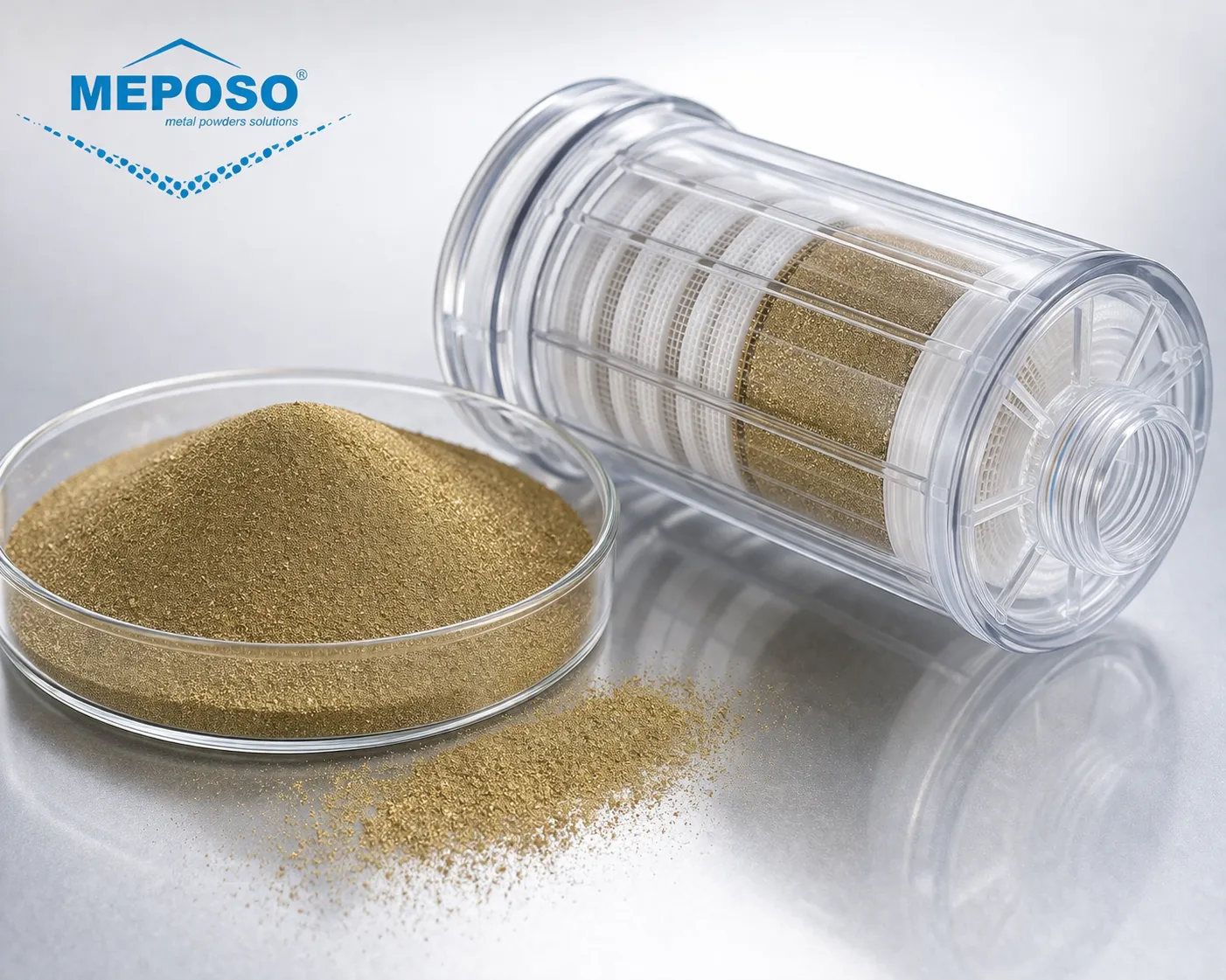
MEPOSO Brass Powder for Filtration Applications
MEPOSO manufactures CuZn30 and CuZn40 brass powders for sintered filter production with controlled particle size, homogeneous alloy distribution and documented chemistry. Our brass powders are produced by atomisation from homogeneous melts, ensuring uniform zinc distribution within each particle for maximum dezincification resistance. Available in standard filter-grade size cuts from 20 to 250 micrometres, with custom grades available on request. Contact MEPOSO for brass powder samples, pore-size correlation data and technical support for sintered filter development.
联系MEPOSO。