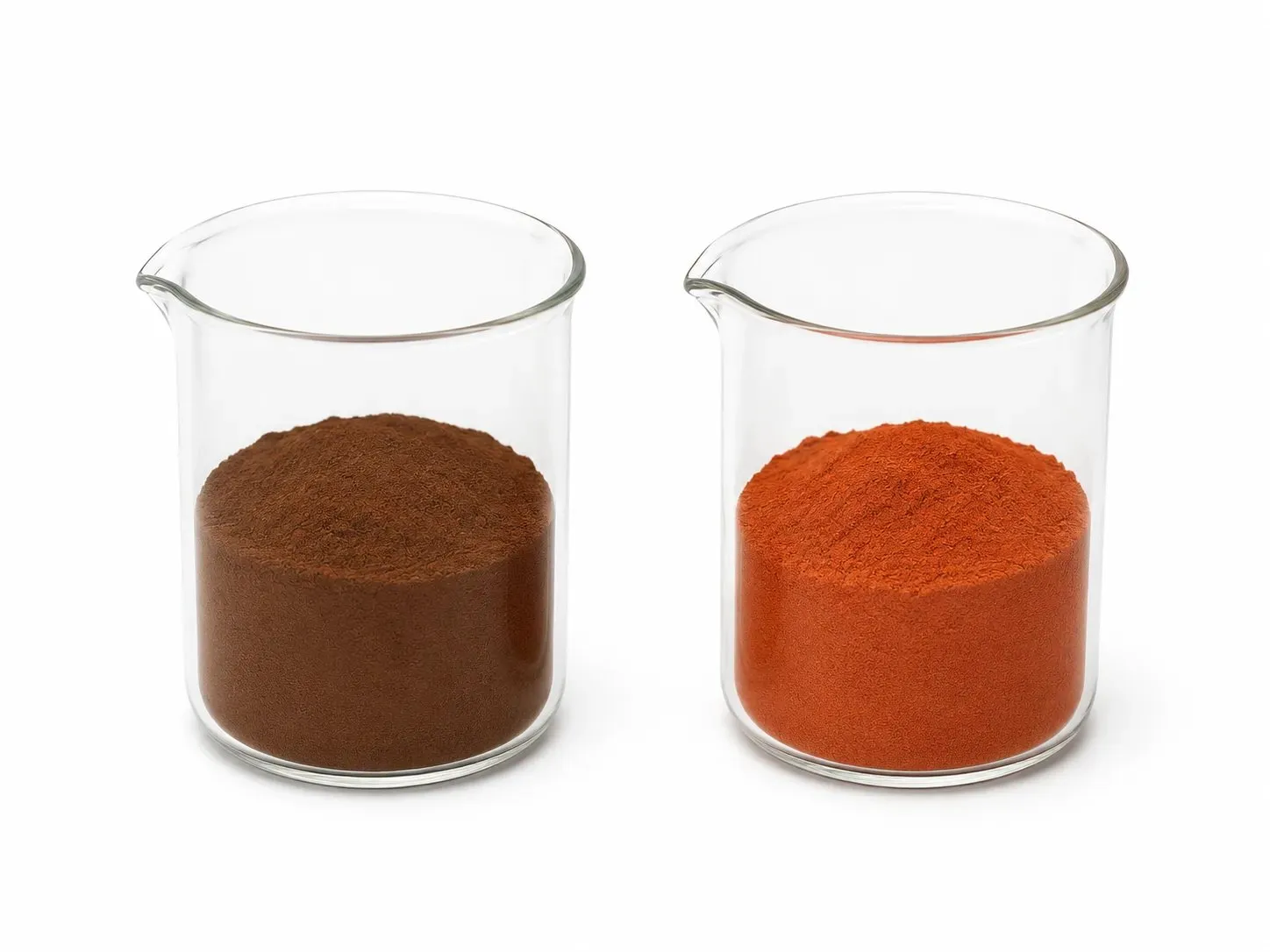
Gesinterte Messingfilter sind poroese Metallelemente, die durch Pressen und Sintern von Messingpulver (typischerweise CuZn30- oder CuZn40-Zusammensetzungen) hergestellt werden, um eine kontrollierte Porenstruktur zu erzeugen, die partikulaere Verunreinigungen physisch zurueckhaelt und gleichzeitig den Fluiddurchgang ermoeglicht. Im Gegensatz zu Einweg-Papier- oder Polymerfiltern sind gesinterte Messingfilter permanent, reinigbar und wiederverwendbar — sie koennen rueckgespuelt, chemisch oder mit Ultraschall gereinigt und tausende Male wiedereingesetzt werden. Die Kupfer-Zink-Legierung bietet intrinsische antimikrobielle Eigenschaften (den oligodynamischen Effekt), die das Bakterienwachstum auf und im Filterelement unterdruecken, was Messing besonders geeignet fuer die Trinkwasser- und Lebensmittelfiltration macht, wo mikrobielle Kontamination minimiert werden muss.
Pore Structure Control Through Powder Selection
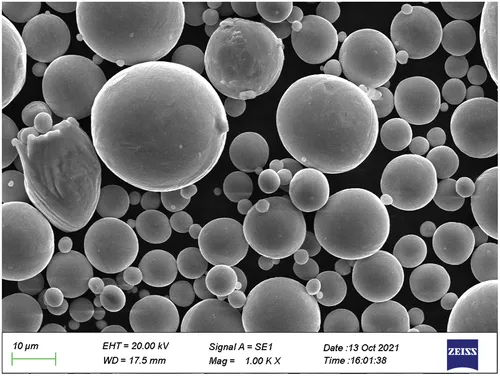
The pore size and permeability of a sintered pirinç filter are primarily determined by the particle size distribution of the starting toz and the sinterleme conditions. Coarser tozs (100-250 micrometres) produce filters with larger pores (40-100 micrometres) suitable for coarse prefiltration. Finer tozs (20-75 micrometres) produce tighter pore structures (5-25 micrometres) for more demanding filtration requirements. The particle morphology also matters: spherical gas-atomised particles pack more uniformly than irregular water-atomised particles, producing more consistent pore sizes and more predictable flow characteristics. MEPOSO tedarik eder pirinç toz in multiple particle size grades specifically characterised for sintered filter production, with controlled morphology and documented pore-size correlation data.
Dezincification Resistance and Material Selection
Dezincification is a form of selective corrosion in which zinc is preferentially leached from the pirinç alloy, leaving behind a porous, weak bakır-rich structure. This is a critical concern for pirinç filters used in water treatment, particularly with aggressive water chemistries (low pH, high chloride, warm sıcaklıks). CuZn30 (70% bakır, 30% zinc) offers better dezincification resistance than higher-zinc alloys and is the standard choice for most water filtration uygulamas. For particularly aggressive environments, low-zinc grades or arsenical pirinç may be specified. The quality of the starting toz affects dezincification resistance: homogeneous alloy distribution within each particle (achievable through gas atomisation of a well-mixed melt) provides better corrosion resistance than mechanically blended bakır and zinc tozs where the alloy distribution is inherently less uniform.
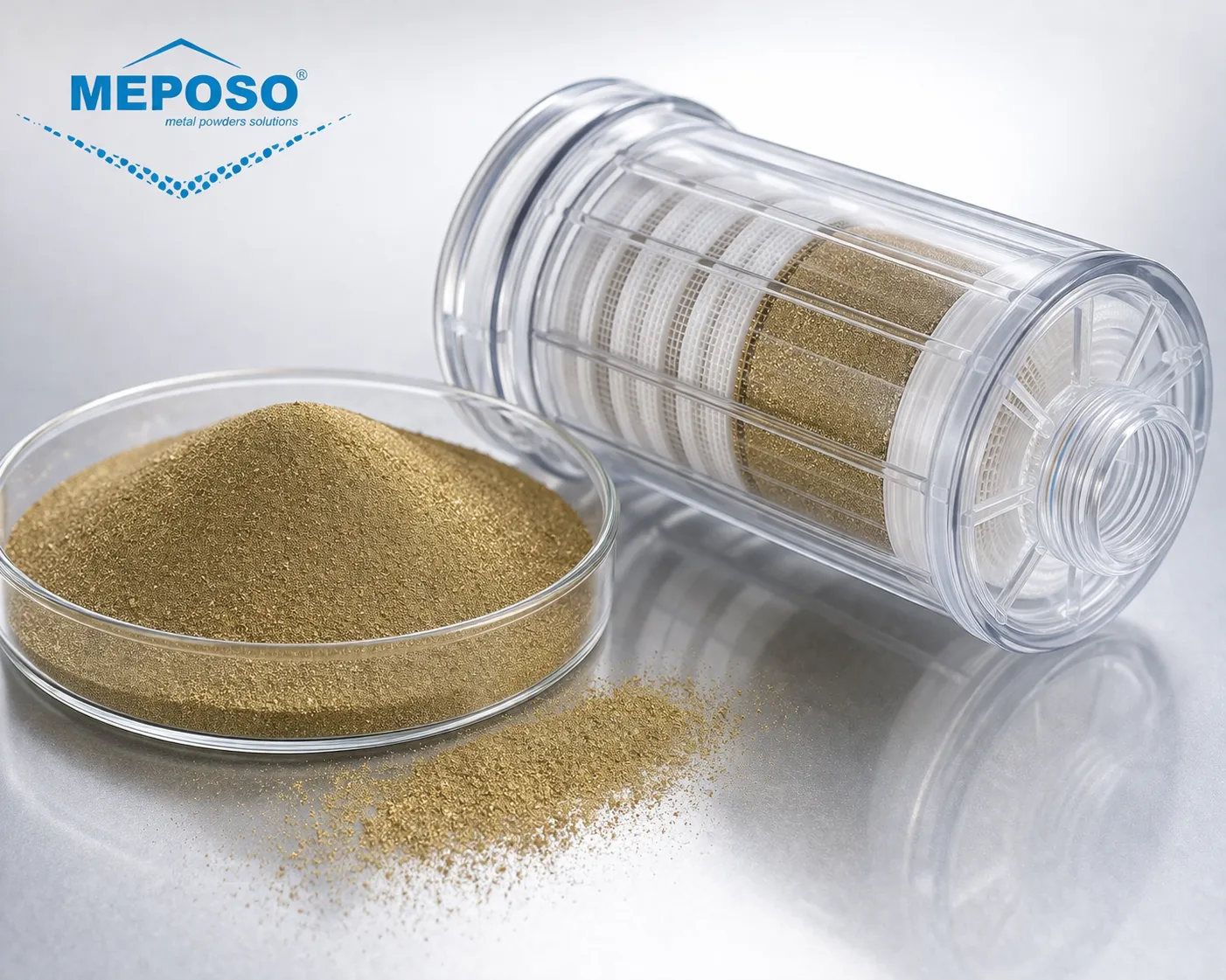
MEPOSO Brass Powder for Filtration Applications
MEPOSO manufactures CuZn30 and CuZn40 pirinç tozs for sintered filter production with controlled particle size, homogeneous alloy distribution and documented chemistry. Our pirinç tozs are produced by atomisation from homogeneous melts, ensuring uniform zinc distribution within each particle for maximum dezincification resistance. Available in standard filter-grade size cuts from 20 to 250 micrometres, with custom grades available on request. MEPOSO ile iletişime geçin for pirinç toz samples, pore-size correlation data and technical support for sintered filter development.
MEPOSO ile iletisime gecin.