Every vessel immersed in seawater faces a relentless biological assault. Barnacles, algae, tubeworms, mussels and bacterial biofilms colonise unprotected hull surfaces within days, building layers of fouling that increase hydrodynamic drag by 20-40%, raise fuel consumption proportionally, and accelerate corrosion. For centuries, copper-based coatings have been the primary defence against biofouling, but a critical distinction exists between elemental copper powder and cuprous oxide powder (Cu2O), and confusing the two leads to coatings that fail completely.
The Antifouling Problem: Why Copper?
Marine biofouling is not merely cosmetic. Within days of immersion, a biofilm of bacteria and diatoms forms on any unprotected surface. Barnacles, tubeworms, algae and mussels follow within weeks. The resulting roughness increases hydrodynamic drag by 20-40%, raising fuel consumption proportionally and accelerating corrosion of the underlying substrate. Antifouling coatings work by maintaining a toxic boundary layer at the paint-water interface. Copper-based systems dominate the market because copper ions (Cu2+ and Cu+) are broadly biocidal against the full spectrum of fouling organisms at concentrations that, when released gradually, remain below levels harmful to the wider marine environment. However, many buyers - and unfortunately many online sellers - confuse elemental copper powder with cuprous oxide powder (Cu2O), leading to products that simply do not work. This confusion costs boat owners money, time and labour on coatings that provide zero antifouling protection.
Why Elemental Copper Powder Does NOT Work as Antifouling
Pure metallic copper (Cu0) is a stable, noble metal. When immersed in seawater, it forms a thin passive oxide layer on its surface and then stops dissolving. This passivation layer acts as a barrier, preventing further release of copper ions into the water. The result is that the hull gets fouled just as fast as an unprotected surface. The shiny, reddish colour of elemental copper powder may look appealing, but it is precisely that metallic stability that makes it useless for antifouling. The copper sits inert inside the paint film, doing nothing. No ion release means no biocidal action means no antifouling protection. The fundamental principle is clear: antifouling does not work by contact. It works by ionic release. The coating must continuously dissolve copper ions (Cu2+) into the seawater boundary layer. Only copper compounds that are chemically reactive with seawater - primarily cuprous oxide (Cu2O) - can achieve this. Elemental copper lacks the thermodynamic instability needed to sustain dissolution in the marine environment.
The Ionic Release Mechanism: How Cu2O Works
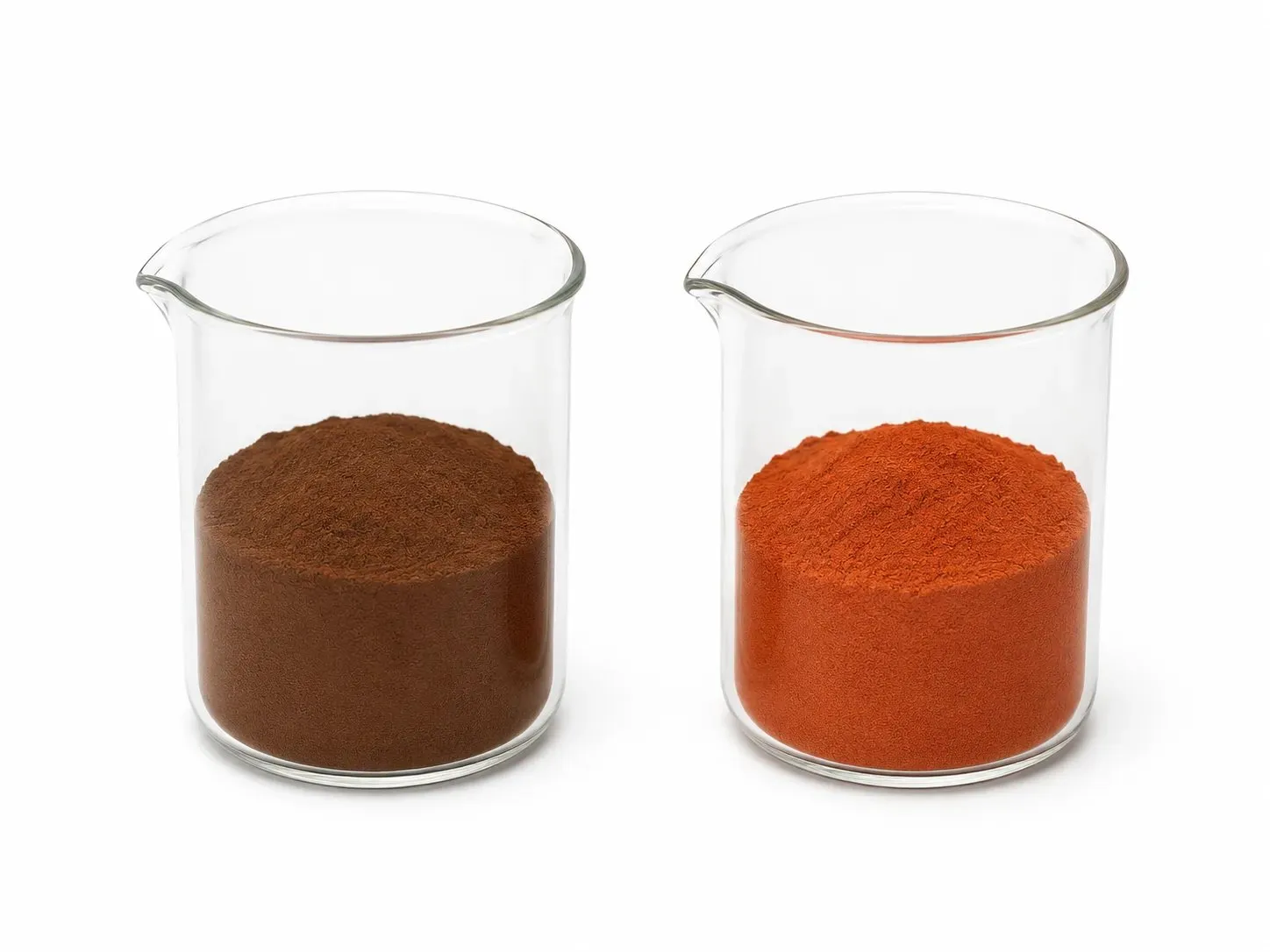
Cuprous oxide (Cu2O) is a red-brown powder where copper atoms are already in the +1 oxidation state, bonded to oxygen. Unlike metallic copper, Cu2O is thermodynamically unstable in seawater. When it contacts the chloride-rich marine environment (approximately 19 g/L chloride ions), it reacts immediately. The cuprous oxide dissolves, releasing cupric ions (Cu2+) that are toxic to barnacle larvae, algae spores and biofilm bacteria. This reaction is continuous as long as fresh Cu2O is exposed to seawater. The released Cu2+ ions interfere with the enzymatic processes that marine organisms use to attach to surfaces. At concentrations as low as 10-20 micrograms per square centimetre, they inhibit settlement of barnacle cyprid larvae and prevent algal spore germination. This creates an invisible chemical shield around the hull. Cupric ions (Cu2+) disrupt the cellular respiration and adhesion proteins of fouling organisms. They are toxic to the larval stages that attempt to colonise the hull surface, but dissipate rapidly in open water - making them effective locally without significant environmental accumulation.
The Advantage of Pre-Oxidised Copper Powder
Using pre-oxidised copper powder (Cu2O) instead of elemental copper in antifouling formulations provides decisive advantages. First, immediate activation: Cu2O starts releasing ions as soon as the hull touches water, with no waiting period for natural oxidation. Second, controlled and predictable dissolution rate: the Cu2O particle dissolves from the outside in, providing a steady, measurable flux of Cu2+ ions over the entire service life of the coating. Third, complete particle utilisation: every particle of Cu2O is reactive, whereas with elemental copper only the thin surface oxide contributes while the metallic core remains inert and wasted. Fourth, proven regulatory compliance: Cu2O is the registered active substance under EU Biocidal Products Regulation (BPR) for product type PT21 antifouling products, while elemental copper is NOT registered as an antifouling biocide. Fifth, formulation compatibility: Cu2O integrates uniformly into paint binders (rosin, acrylic copolymers, silyl-acrylate) and maintains stable suspension during storage. In summary: elemental copper powder gives a nice colour but zero protection. Cuprous oxide (Cu2O) gives real, continuous, scientifically proven antifouling performance.
Activation in Seawater: What Happens at Launch
When a freshly painted hull enters seawater, the outermost layer of the antifouling coating begins to hydrate. Seawater penetrates the paint matrix and reaches the Cu2O particles embedded within it. The chloride ions in seawater (approximately 19 g/L) attack the oxide surface, dissolving it and releasing Cu2+ into the water boundary layer. This process is self-regulating: the dissolution rate depends on water temperature, salinity and flow velocity. In warmer, more saline tropical waters - where biofouling pressure is highest - the release rate naturally increases, providing proportionally more protection exactly where it is needed most. This temperature-salinity feedback mechanism is one of the key engineering advantages of Cu2O-based antifouling systems.
Self-Polishing Copolymer Technology and Continuous Ablation
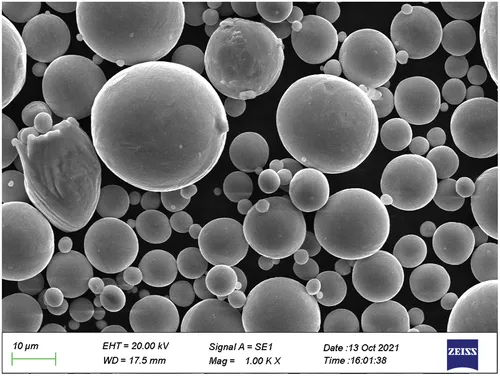
Modern antifouling paints use self-polishing copolymer (SPC) binders that hydrolyse in seawater at a controlled rate. As the binder dissolves, it exposes fresh Cu2O particles beneath, ensuring that new biocide is always available at the surface. This mechanism provides consistent antifouling performance over 3-5 years. Ablation is the process by which the paint film gradually erodes from the surface, layer by layer, under the action of water flow. Each eroded layer exposes a fresh surface loaded with Cu2O particles, restarting the ionic release cycle. This is fundamentally different from a hard coating where the biocide at the surface gets depleted and the underlying paint contributes nothing. For ablative antifouling to work correctly, the copper oxide particles must be uniformly distributed throughout the paint film thickness. This is achievable only with properly graded, gas-atomised Cu2O powder - not with irregular metallic copper particles that settle to the bottom of the can during storage.
The Colour Question: Why Appearance Is Irrelevant
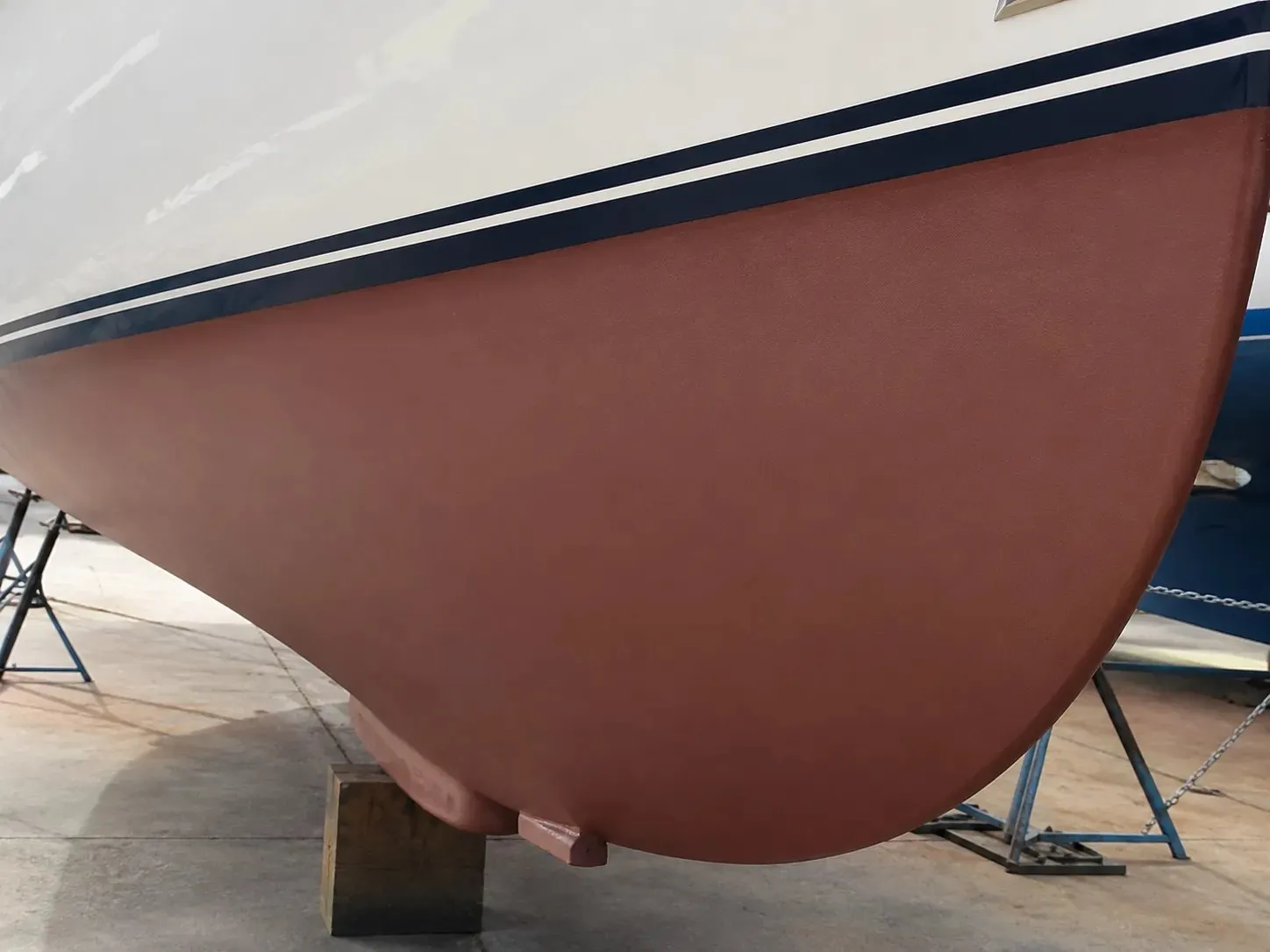
Many customers reject oxidised copper powder because of its dark red-brown colour, preferring the bright, shiny appearance of metallic copper. This is a fundamental misunderstanding. The colour of the raw powder is completely irrelevant to antifouling performance. What matters is the chemical state of the copper atoms. A bright copper-coloured antifouling paint may look premium, but if it contains metallic copper instead of Cu2O, it will fail within weeks. Conversely, the dull red-brown of cuprous oxide is the visual signature of a powder that is chemically ready to dissolve and protect. In antifouling coatings, ugly colour equals working product. Remember: you are not painting a car - you are protecting a hull. The antifouling coat will be underwater, invisible, surrounded by biocidal ions. Its job is chemistry, not cosmetics. Choose the oxide that works, not the metal that shines.
Market Confusion: How to Identify Reliable Cu2O Powder
The internet is flooded with online sellers offering copper powder for antifouling without specifying whether the product is elemental copper or cuprous oxide. Many simply resell generic copper powder from uncontrolled sources, with no chemical analysis, no particle size certification, and no understanding of the biocidal mechanism. The result is that boat owners buy what they think is an antifouling ingredient, apply it, and within months the bottom is covered in barnacles. When evaluating a Cu2O powder supplier, the following must be verifiable: certificate of analysis (CoA) confirming Cu2O content of at least 97% with free copper and CuO impurities clearly stated; particle size distribution measured by laser diffraction with D50 and D90 values; XRD analysis confirming crystallographic phase is predominantly Cu2O; Safety Data Sheet compliant with EU CLP regulation; REACH registration documentation; and BPR active substance status for PT21 antifouling products. If a seller cannot provide these documents, do not buy, regardless of price. MEPOSO, based in Milano, Italy, manufactures and supplies certified Cu2O copper oxide powder for the marine antifouling industry, with full analytical documentation, controlled particle size distribution, and complete batch traceability for every shipment. Contact MEPOSO to discuss your Cu2O requirements, request technical data sheets, or arrange a sample shipment.
Contact MEPOSO for Cu2O copper oxide powder, technical data sheets, certificates of analysis and formulation support for antifouling coatings.