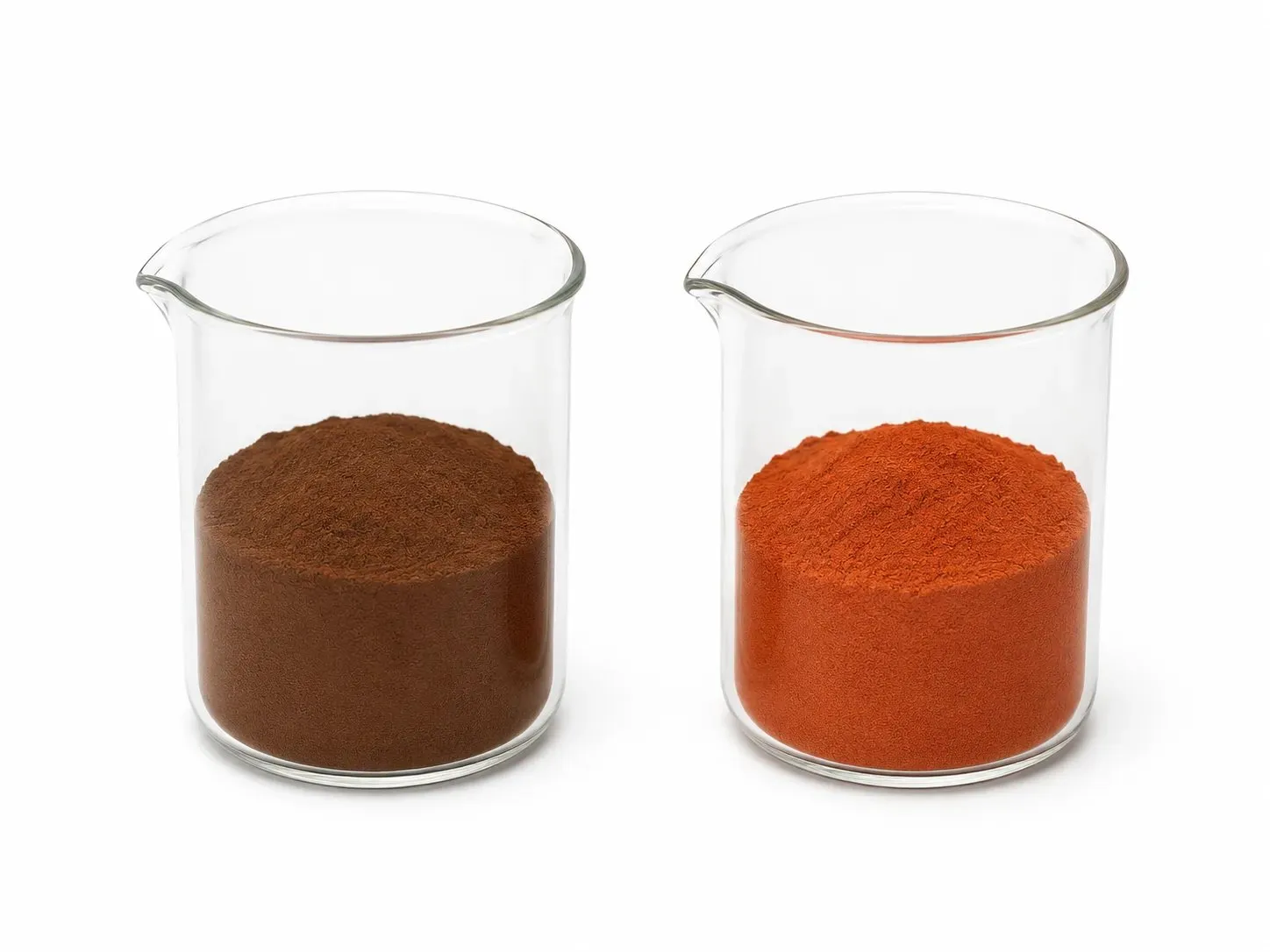
The selection of a metal powder for an industrial application is a multi-variable engineering decision, not a simple commodity purchase. Two powders with identical chemical compositions can produce completely different results in downstream processes if their particle size distributions, morphologies, apparent densities or oxide levels differ. For industrial buyers responsible for qualifying powder sources, understanding which powder characteristics matter most for which processes is the foundation of successful supplier selection. MEPOSO, based in Milano, Italy, works across a broad range of powder applications - from press-and-sinter PM parts to brazing pastes, from thermal spray coatings to PTFE compounds - and this cross-application experience allows us to guide customers toward the powder specification that will deliver reliable, repeatable results in their specific production environment.
Matching Powder to Process: The Starting Point
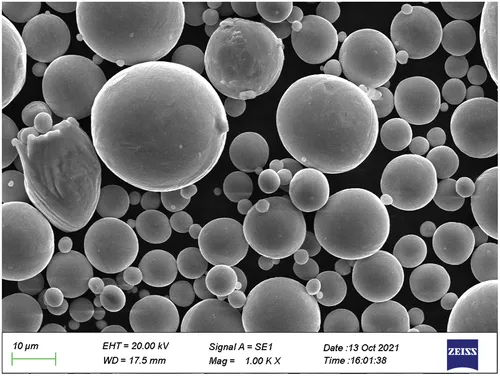
Different manufacturing processes impose fundamentally different demands on the powder. Press-and-sinter powder metallurgy requires powders with good compressibility, high green strength and controlled dimensional change during sintering. Irregular, water-atomized particles with rough surfaces are ideal because they interlock mechanically during compaction. Particle sizes typically range from 45 to 150 micrometres, and apparent density should be optimised for the specific press tooling geometry. Thermal spraying demands powders that feed consistently through spray guns, melt uniformly in the flame or plasma, and produce dense, well-adhered coatings. Spherical particles in the 15 to 106 micrometre range (depending on spray method) with high flowability are preferred. Brazing paste formulation requires powders that disperse uniformly in the binder system without settling, maintain stable viscosity during storage and dispensing, and melt predictably during the brazing thermal cycle. Fine particle sizes (typically below 45 micrometres) with controlled oxide levels are critical for consistent paste rheology. PTFE and polymer compound filling demands powders that distribute uniformly in the polymer matrix, survive the moulding or sintering cycle without excessive oxidation, and deliver the target mechanical and thermal property improvements. Each of these application families has its own set of priority specifications, and the first step in choosing the right powder is identifying which process parameters dominate the application.
Particle Size Selection: Getting the Range Right
Particle size distribution (PSD) is arguably the single most important powder specification because it influences almost every aspect of downstream processing. The D10, D50 and D90 values define the spread of the distribution, while the span (D90-D10)/D50 quantifies its width. A narrow distribution provides more predictable behaviour but costs more to produce because more material is lost during classification. A broader distribution is cheaper but may introduce variability in filling, packing and melting behaviour. For press-and-sinter applications, a bimodal distribution combining coarse (100-150 micrometre) and fine (below 45 micrometre) fractions can optimise packing density in the die cavity. For brazing pastes, a D90 below 45 micrometres is typically required to prevent nozzle clogging during dispensing and to ensure uniform paste film thickness during screen printing. For thermal spraying, the optimal PSD depends on the spray method: plasma spray typically uses 45-106 micrometres, HVOF uses 15-45 micrometres, and cold spray may require 5-25 micrometres. Specifying the wrong PSD wastes money: if the powder is too coarse for the application, it may not perform; if too fine, the buyer pays for expensive classification that provides no process benefit. MEPOSO provides standard PSD cuts and can produce custom fractions to match specific process requirements.
Chemistry vs Morphology: Understanding Both Dimensions
A common mistake in powder procurement is focusing exclusively on chemical composition while ignoring morphological characteristics, or vice versa. Two copper powders both meeting a specification of 99.5% Cu minimum can behave completely differently if one is spherical gas-atomized material and the other is irregular water-atomized material. The chemical composition defines what the powder is made of - the base metal, alloying elements, impurities and oxide content. It determines the metallurgical properties of the final part: mechanical strength, electrical conductivity, corrosion resistance, melting behaviour and compatibility with other materials. Morphology defines the physical shape of the powder particles - spherical, irregular, dendritic, flake or sponge - and determines how the powder behaves during handling, feeding, compaction, spreading and melting. Morphology is primarily determined by the production method (atomization route, electrolytic deposition, chemical precipitation) and cannot be changed after production without fundamentally altering the powder. Both dimensions must be specified together. A procurement specification that reads merely 'Cu 99.5%, -150 micrometres' is insufficient because it allows powders with completely different process behaviours to be supplied. The correct specification should include chemistry (elemental composition, oxide content), particle size distribution (D10, D50, D90, span), morphology (atomization route or shape descriptor), apparent density range, and flowability target. MEPOSO technical data sheets provide all five specification dimensions for every powder grade.

Apparent Density and Flowability: Process-Critical Properties
Apparent density and flowability are functional properties that determine how a powder performs in real production equipment. Apparent density is the mass of powder that occupies a given volume under the influence of gravity alone, without vibration or compaction. It is measured by filling a standardised cup (25 cm3 per ASTM B212) and weighing the contents. Higher apparent density means more metal per unit volume, which affects die fill weight in pressing, material consumption in spraying, and filler loading in polymer compounds. Flowability measures how readily the powder moves under gravity, typically using a Hall flowmeter (ASTM B213) or Carney funnel. Good flowability ensures consistent feeding in automated production, uniform layer spreading in additive manufacturing, and reproducible die filling in powder metallurgy presses. The critical insight is that apparent density and flowability are not independent of morphology and PSD - they are consequences of them. Spherical particles naturally pack more densely and flow more freely than irregular particles of the same size. Finer particles have lower apparent density and worse flowability than coarser particles of the same morphology because inter-particle cohesion forces become dominant at small sizes. This means that buyers cannot independently specify morphology, PSD, apparent density and flowability - they must understand how these properties are interconnected and accept the trade-offs inherent in each atomization route.
Flowability Testing: Methods and Practical Interpretation
Flowability testing provides quantitative data on powder behaviour, but interpreting test results requires understanding what each method actually measures and how it relates to real production conditions. The Hall flowmeter (ASTM B213) measures the time for 50 grams of powder to flow through a calibrated funnel with a 2.54 mm orifice. Results are reported in seconds - lower values indicate better flowability. Typical values for gas-atomized copper: 22-28 seconds; air-atomized: 28-38 seconds; water-atomized: may not flow through the Hall funnel at all, requiring the Carney funnel (6.35 mm orifice) instead. The limitation of funnel-based methods is that they measure free-flowing behaviour under gravity only. Many industrial processes subject the powder to vibration, mechanical agitation or gas fluidisation, which can make poorly-flowing powders perform adequately. Some advanced characterisation methods include dynamic powder flow analysis using rotating drum instruments (e.g. GranuDrum) that measure flowing, cascading and cataracting behaviour, powder rheometry that measures stress-strain response under controlled conditions, and avalanche angle testing that correlates with spreading behaviour in powder bed processes. For routine quality control, the Hall or Carney funnel remains the industry standard because it is simple, reproducible and widely understood. For new application development or troubleshooting, more advanced methods may be warranted. MEPOSO reports Hall or Carney flow data on every certificate of analysis and can arrange advanced characterisation through partner laboratories.
Supplier Qualification: What to Verify Before Committing
Qualifying a metal powder supplier is a multi-step process that should evaluate technical capability, quality management and supply reliability before the first production order is placed. Technical evaluation should include a review of the supplier's atomization capabilities and which routes are available, quality control laboratory equipment and testing standards used, ability to produce custom particle size distributions and chemistry specifications, historical batch consistency data showing statistical process control, and technical support resources for troubleshooting application issues. Quality management evaluation should verify ISO 9001 or equivalent quality management system certification, certificate of analysis format and the specific test data included, batch traceability from raw material to finished powder, non-conformance handling and corrective action procedures, and change management protocols that ensure specification stability. Supply reliability assessment should cover production capacity relative to the buyer's anticipated volume requirements, lead time consistency and buffer stock policies, geographic location and logistics considerations, multi-source capability if the supplier atomizes at multiple facilities, and financial stability indicators. MEPOSO invites prospective customers to conduct supplier qualification audits at our Milano facility, where they can review our atomization operations, laboratory capabilities, quality management system and traceability infrastructure. We believe that transparent supplier evaluation produces stronger, more productive long-term partnerships.
Contact MEPOSO for technical guidance on powder selection, sample requests for process evaluation, or supplier qualification documentation for your quality management system.