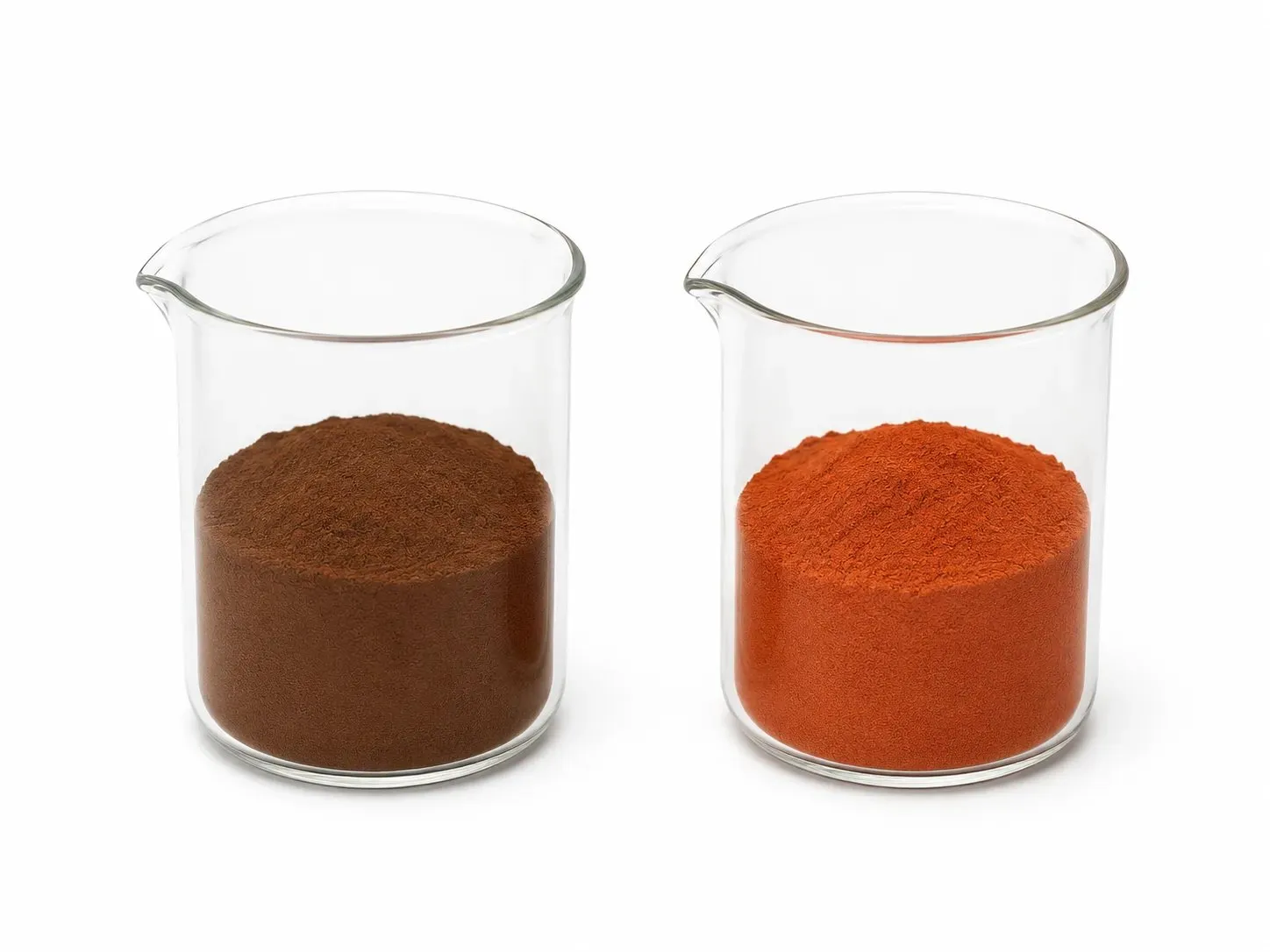
Electrical contacts are among the most demanding applications for metal powders. Every time a circuit breaker trips, a relay closes, or a contactor engages, the contact surfaces must carry current with minimal resistance, withstand mechanical impact, and survive the intense heat of electric arcs that can reach temperatures above 6,000 degrees Celsius. The powder metallurgy route - pressing and sintering metal powders into dense contact tips - has become the dominant manufacturing method because it allows engineers to combine materials that cannot be alloyed conventionally: silver with cadmium oxide, copper with tungsten, or silver with graphite. In every case, the characteristics of the starting powder - its purity, particle size distribution, morphology and apparent density - directly determine the microstructure and performance of the finished contact. MEPOSO, based in Milano, supplies copper powders specifically engineered for electrical contact manufacturing, supporting customers from prototype development through full-scale production.
Why Powder Metallurgy Dominates Contact Manufacturing
The fundamental challenge in electrical contact engineering is that no single metal satisfies all requirements simultaneously. Silver offers the highest electrical and thermal conductivity of any metal, but it is too soft and welds under arcing. Tungsten resists arc erosion superbly, but its conductivity is poor. Copper provides an excellent cost-performance ratio for conductivity, but it oxidises in air, forming resistive surface films. Powder metallurgy solves this dilemma by producing composite materials - pseudo-alloys - that combine the best properties of each constituent. In a silver-copper oxide contact, for example, fine copper oxide particles are dispersed throughout a silver matrix. During arcing, the oxide particles decompose and release gas, which blows the arc away from the surface and prevents contact welding. In a copper-tungsten contact, the refractory tungsten skeleton resists erosion while the copper network provides the current-carrying path. These microstructures are impossible to achieve through conventional melting because the constituent metals are either immiscible (copper-tungsten) or because the oxide dispersoids would reduce during melting. Only the powder route - blending, pressing at 400-700 MPa, and sintering at temperatures below the melting point of the matrix metal - preserves the designed microstructure. This is why the starting powder characteristics matter so profoundly: particle size, shape, purity and oxide content directly translate into contact density, conductivity and switching life.
Silver-Copper Oxide Contacts: Powder Requirements and Performance
Silver-copper oxide (AgCuO) contacts have largely replaced silver-cadmium oxide (AgCdO) in many regions due to environmental regulations restricting cadmium use. The typical composition ranges from 88% silver with 12% copper oxide to 90/10 ratios, with the copper oxide serving as the arc-quenching dispersoid. When an arc strikes the contact surface, copper oxide particles decompose endothermically, absorbing energy and releasing oxygen gas that helps extinguish the arc. This mechanism dramatically reduces contact welding tendency and material transfer between the fixed and moving contacts. The copper oxide powder used in these contacts must meet stringent specifications. Particle size typically ranges from 1 to 10 micrometres, with a narrow distribution being critical for uniform dispersion throughout the silver matrix. Coarser particles create weak spots where arc erosion concentrates, while ultrafine particles tend to agglomerate during blending and create oxide-rich clusters that reduce local conductivity. The oxide must be CuO (cupric oxide, tenorite) rather than Cu2O (cuprous oxide), because CuO provides superior arc-quenching through its higher oxygen content and endothermic decomposition characteristics. Purity must exceed 99% to avoid introducing contaminants that could degrade contact resistance or create hot spots. MEPOSO supplies both the copper oxide powder component and the electrolytic copper powder used as a precursor for internal oxidation processes, where a silver-copper alloy strip is oxidised in a controlled atmosphere to form the AgCuO composite in situ.
Copper-Tungsten Contacts: Combining Refractoriness with Conductivity
Copper-tungsten (CuW) contacts are the workhorses of high-power switching: vacuum interrupters, SF6 circuit breakers, and high-voltage contactors. Tungsten contributes a melting point of 3,422 degrees Celsius and exceptional resistance to arc erosion, while copper fills the pores of the tungsten skeleton to provide electrical and thermal conductivity. Common compositions range from CuW 50/50 to CuW 20/80 (copper/tungsten by weight), with the tungsten content increasing for higher-voltage applications where arc erosion is more severe. The manufacturing process typically involves pressing tungsten powder into a porous skeleton at pressures of 200-400 MPa, sintering the skeleton at 1,100-1,300 degrees Celsius in hydrogen atmosphere, and then infiltrating molten copper into the pores under vacuum or in a reducing atmosphere. The copper powder used for infiltration must be of high purity, typically exceeding 99.9% Cu, because even trace impurities such as oxygen, sulphur or phosphorus can create resistive inclusions at the copper-tungsten interface. Particle size of the copper infiltrant powder is less critical than for the pressed component, as it melts completely during infiltration, but apparent density and flow rate affect dosing consistency in automated production lines. For pressed-and-sintered CuW routes (without infiltration), both the copper and tungsten powder morphology become critical. Irregular, dendritic copper powder provides better green strength during pressing, while spherical copper powder offers higher apparent density and better flow for automatic die filling. MEPOSO electrolytic copper powders, with their characteristic dendritic morphology and high purity, are widely used in both infiltration and press-sinter CuW contact manufacturing.
Carbon Brushes: The Role of Copper Powder in Commutation
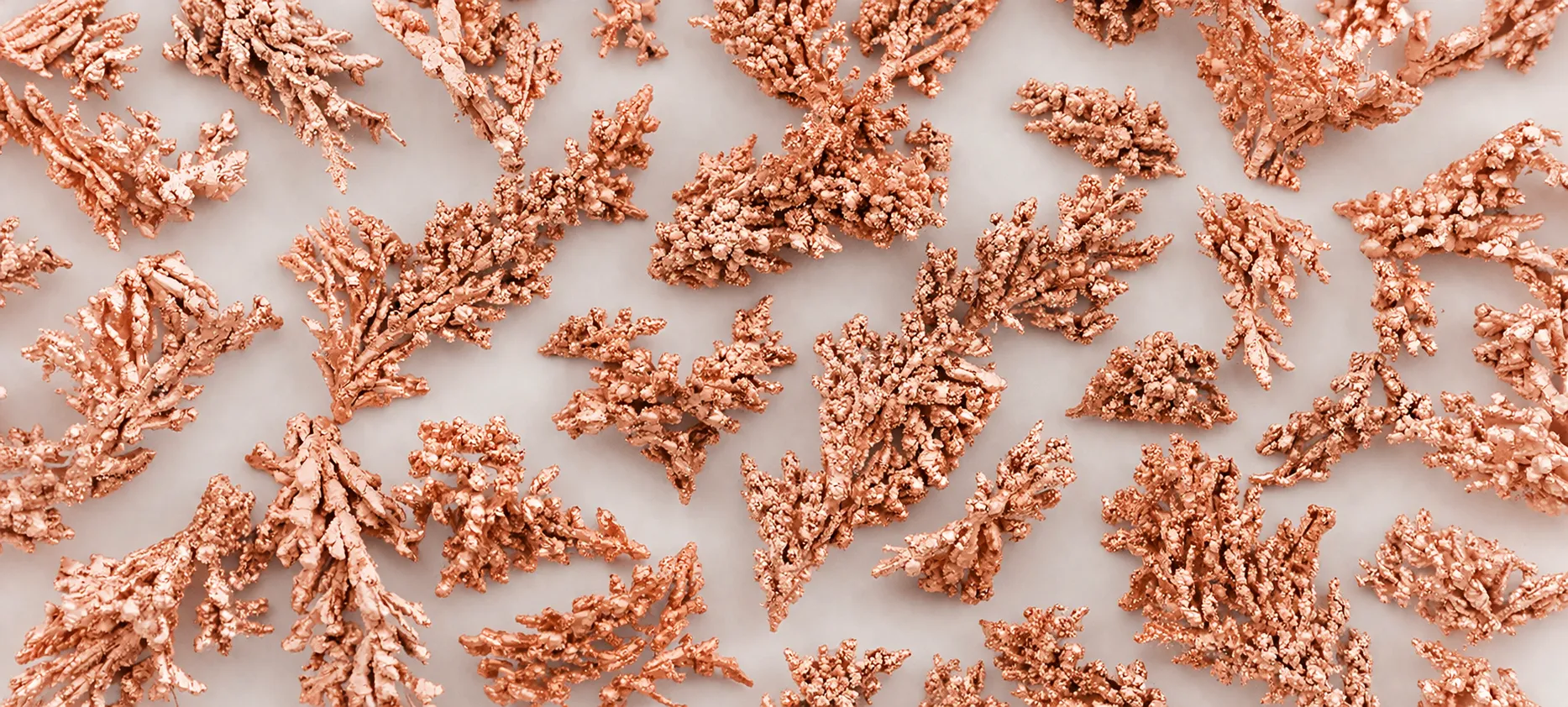
Carbon brushes transfer electrical current between stationary and rotating parts of electric motors, generators and alternators. The brush material must conduct current efficiently while also providing lubrication to the commutator or slip ring surface, minimising wear on both the brush and the mating surface. Pure graphite brushes work well at low current densities, but as power requirements increase, copper powder is added to the graphite matrix to boost conductivity without sacrificing the self-lubricating properties of carbon. Metal-graphite brushes typically contain 20-80% copper powder by weight, blended with natural or synthetic graphite, bonded with resin or pitch, and then baked or sintered at temperatures between 600 and 900 degrees Celsius. The copper powder grade profoundly affects brush performance. Electrolytic copper powder with dendritic particle shape provides excellent interlocking with graphite flakes, creating a strong green compact that survives handling before sintering. The particle size must be matched to the graphite particle size for uniform mixing - typically minus 150 micrometres (100 mesh) for standard industrial brushes, down to minus 45 micrometres (325 mesh) for high-performance applications. Purity is critical because surface oxides on the copper particles increase electrical resistance at the copper-graphite interfaces, reducing the overall conductivity of the brush. MEPOSO electrolytic copper powders provide the combination of high purity, dendritic morphology and controlled particle size distribution that carbon brush manufacturers require for consistent product quality across production campaigns.
Powder Selection Criteria: Particle Size, Morphology and Purity
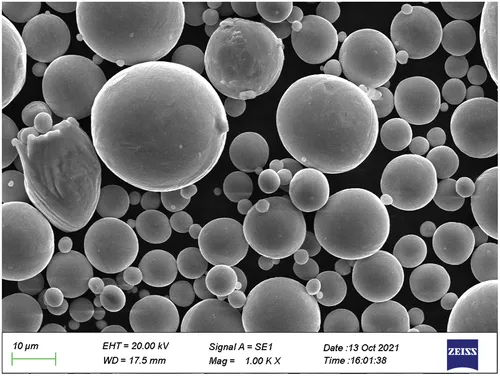
Selecting the right copper powder for electrical contact manufacturing requires careful consideration of three interrelated parameters: particle size distribution, particle morphology, and chemical purity. Particle size directly affects the density, porosity and surface area of the pressed compact. Fine powders (below 45 micrometres) achieve higher sintered densities and more uniform microstructures, which translate into better conductivity and more consistent contact resistance. However, finer powders are harder to handle, more prone to oxidation, and more expensive. Coarser fractions (45 to 150 micrometres) offer better flowability for automatic die filling and lower cost, but may leave residual porosity that compromises conductivity. The ideal size distribution depends on the specific application and pressing method. Particle morphology - the three-dimensional shape of individual powder particles - affects both pressing and sintering behaviour. Electrolytic copper powder has an irregular, dendritic structure with high surface area and excellent interlocking between particles. This gives superior green strength (the strength of the pressed compact before sintering), making it ideal for contacts that require complex shapes or thin cross-sections. Atomised copper powder, by contrast, tends toward spherical or rounded shapes with lower surface area, offering better flow and higher apparent density but lower green strength. Chemical purity must be specified with attention to specific harmful elements. Oxygen content above 0.2% creates copper oxide inclusions that increase contact resistance. Sulphur and lead, even in parts per million, can cause hot shortness during sintering. Iron and tin contamination can affect the magnetic and electrical properties respectively.
Arc Erosion Resistance: Understanding Degradation Mechanisms
Every time an electrical contact opens or closes under load, an electric arc forms in the gap between the separating or approaching surfaces. This arc, with temperatures reaching 6,000 to 20,000 degrees Celsius depending on the current and voltage, subjects the contact surface to extreme thermal, mechanical and chemical stresses. Arc erosion occurs through several mechanisms: evaporation of contact material from the superheated zone, ejection of molten metal droplets by electromagnetic forces, oxidation of the contact surface by the surrounding atmosphere, and mechanical spalling caused by thermal shock as the arc extinguishes and the surface rapidly cools. The rate of arc erosion depends on the contact material composition, the arc energy (determined by circuit voltage, current and arc duration), the contact geometry, and the switching atmosphere. Copper-based contacts are particularly susceptible to oxidation-driven erosion because copper oxides have significantly different thermal expansion coefficients from metallic copper, causing surface cracking and spalling. This is why copper-tungsten contacts are preferred over pure copper for high-energy applications: the tungsten phase has an extremely high melting and boiling point, acting as a thermal anchor that limits the volume of material reaching vaporisation temperature during each arc event. The copper phase, while more vulnerable to erosion, serves the essential function of providing thermal conductivity to extract heat from the arc-affected zone between switching operations. Understanding these mechanisms helps contact engineers specify the optimal copper powder grade for their application - a decision that MEPOSO technical staff can support with metallurgical expertise and laboratory data.
Sintering Atmosphere and Temperature: Process Control for Contact Quality
The sintering process transforms a loosely bonded pressed compact into a dense, high-conductivity contact material through solid-state diffusion at elevated temperatures. For copper-based contacts, sintering temperatures typically range from 750 to 950 degrees Celsius, well below copper's melting point of 1,085 degrees Celsius but high enough to activate diffusion bonding between adjacent powder particles. The sintering atmosphere is critically important for copper-based contacts because copper readily oxidises at sintering temperatures. A reducing atmosphere - typically pure hydrogen or dissociated ammonia (75% hydrogen, 25% nitrogen) - is essential to reduce any surface oxides on the copper particles and prevent new oxide formation during the sintering cycle. The dew point of the sintering atmosphere must be controlled below minus 30 degrees Celsius to ensure effective oxide reduction. Even small amounts of residual oxygen in the furnace atmosphere can create copper oxide films at particle boundaries, acting as barriers to both metallic diffusion and electrical conduction. The heating rate during sintering must be controlled to avoid thermal gradients that cause warping or cracking, particularly for complex geometries. A typical sintering profile includes a slow ramp at 3-5 degrees per minute to the hold temperature, a dwell time of 30-60 minutes to allow complete densification, and controlled cooling to prevent thermal shock. Vacuum sintering is used for some premium contact grades, particularly copper-tungsten contacts for vacuum interrupters, where even trace amounts of gas residues within the contact microstructure would cause unacceptable outgassing during vacuum switching operations. The starting powder characteristics - particularly the oxygen content, surface area and particle size distribution specified by MEPOSO for each application - directly affect the sintering response and final contact properties.
Quality Assurance and Testing of Sintered Contacts
Finished sintered contacts must pass rigorous quality assurance testing before they can be approved for use in switchgear and other electrical devices. The primary tests include electrical conductivity measurement (typically expressed as a percentage of International Annealed Copper Standard, IACS), hardness testing (Vickers or Rockwell scales), density measurement (Archimedes method), metallographic examination of microstructure, and contact resistance testing under specified load and current conditions. For powder metallurgy contacts, the consistency of these properties from batch to batch depends heavily on the consistency of the incoming metal powder. Variations in particle size distribution, apparent density, or chemical composition of the copper powder will translate directly into variations in contact density, conductivity and mechanical strength. This is why contact manufacturers insist on powder suppliers who can demonstrate lot-to-lot consistency backed by comprehensive certificates of analysis. MEPOSO provides full chemical analysis including trace element determination by ICP-OES, particle size distribution by laser diffraction, apparent density per ISO 3923, flow rate per ISO 4490, and sieve analysis per ISO 4497 with every shipment. Beyond incoming material testing, in-process controls during pressing and sintering include dimensional checks, weight verification, and sample testing for density and conductivity at regular intervals. End-of-line testing typically includes 100% visual inspection, sample hardness testing, and statistical process control charting to detect any drift in product quality before it results in out-of-specification contacts reaching the customer.
MEPOSO Copper Powders for the Contact Materials Industry
MEPOSO, headquartered in Milano, Italy, is a specialist supplier of copper and copper alloy powders serving the electrical contact manufacturing industry across Europe and worldwide. Our product portfolio for contact applications includes electrolytic copper powder in multiple particle size grades, from coarse fractions for copper-tungsten infiltration to fine grades for silver-copper oxide contact production. Each grade is produced under controlled conditions with documented traceability from cathode lot to finished powder, ensuring the consistent purity and particle characteristics that contact manufacturers depend on. Our electrolytic copper powders feature consistently low oxygen content (typically below 0.15%), controlled apparent density, and the dendritic particle morphology that provides superior green strength in pressing operations. For copper-tungsten contact manufacturers, we offer high-purity infiltration-grade copper powder with purity exceeding 99.95% Cu, specifically designed to achieve complete pore filling and minimal interfacial contamination during the liquid-phase infiltration process. For carbon brush manufacturers, we provide copper powders with tailored particle size distributions that blend uniformly with graphite and produce brushes with excellent conductivity and mechanical strength. Beyond standard catalogue grades, MEPOSO works with contact manufacturers to develop custom powder specifications optimised for their specific pressing equipment, sintering profiles and end-product requirements. Our metallurgical engineering team can provide guidance on powder selection, assist with sintering trials, and help troubleshoot production issues related to powder characteristics. Contact our Milano headquarters for technical consultation, sample requests and competitive quotations.
Contact MEPOSO for copper and copper oxide powders for electrical contact manufacturing, with full technical data sheets, certificates of analysis and metallurgical process support.