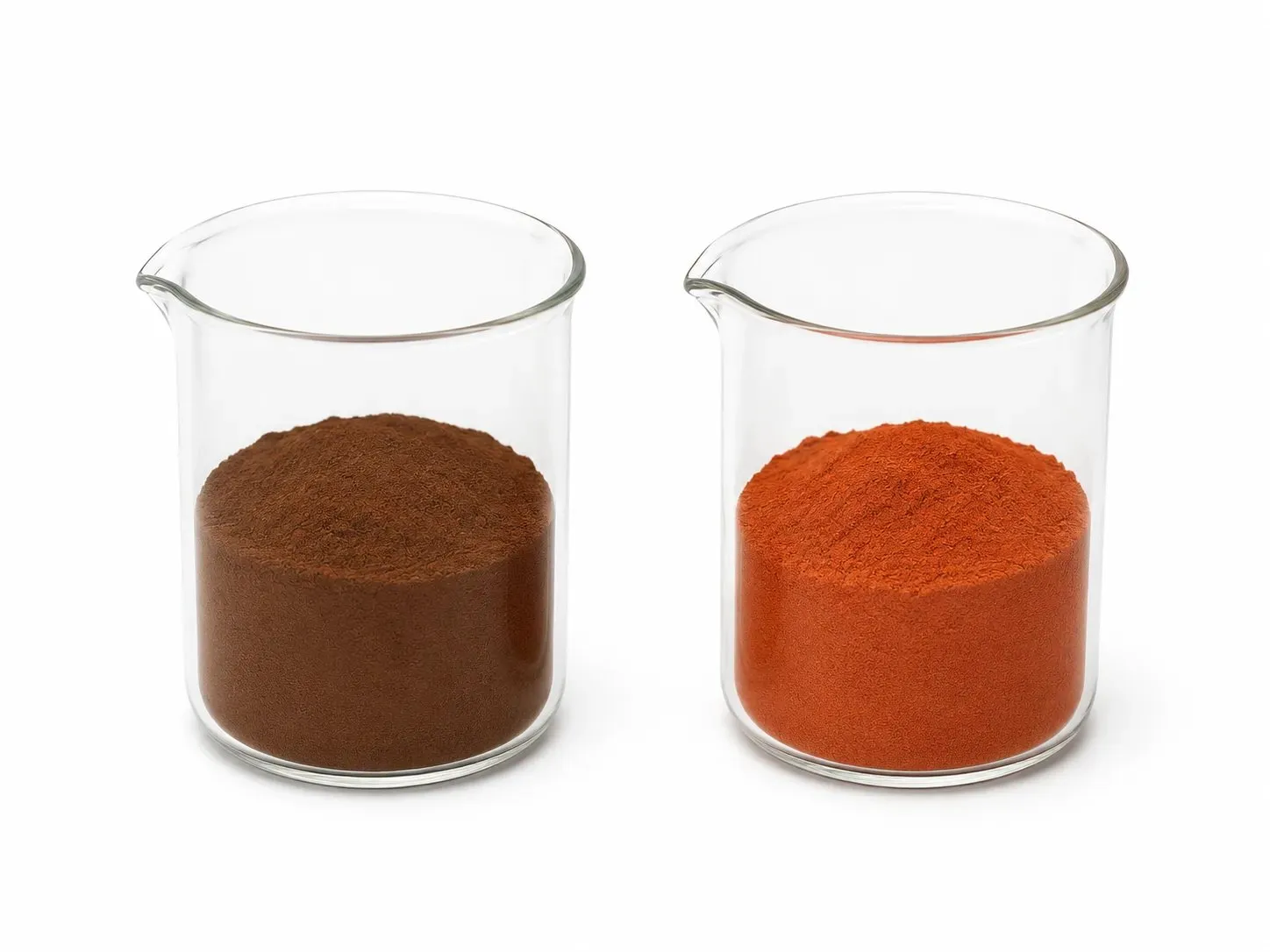
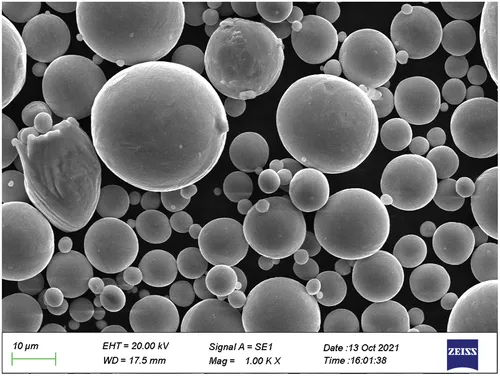
Diamond cutting tools - saw blades, wire beads, core bits and grinding wheels - rely on a metal bond matrix to hold the diamond crystals in place during operation. The matrix must wear at a controlled rate, exposing fresh diamond as the tool cuts, while providing enough mechanical support to prevent premature diamond pullout. The composition of the metal powder blend used to manufacture this matrix is one of the most critical engineering decisions in diamond tool production. Historically, cobalt powder dominated this application due to its excellent diamond retention and sintering characteristics, but rising costs, supply volatility and REACH classification concerns have driven the industry toward copper-tin-iron pre-alloyed alternatives that can match or exceed cobalt performance in many applications.
Why Matrix Composition Matters More Than Diamond Quality Alone
A high-quality diamond crystal in a poorly designed matrix will underperform dramatically. If the matrix is too hard, it will not wear fast enough to expose fresh diamond cutting points, leading to glazing and loss of cutting speed. If the matrix is too soft, it will erode too quickly, releasing diamonds before they have done useful cutting work - wasting expensive diamond and producing premature segment failure. The metal powder blend must be engineered to match the specific abrasiveness of the material being cut. Cutting reinforced concrete requires a different matrix hardness profile than cutting granite, marble or asphalt. This is why pre-alloyed metal powders have become essential: they provide consistent, repeatable matrix properties that can be fine-tuned for each application. MEPOSO supplies pre-alloyed copper-tin, copper-tin-iron and cobalt-free bond powders specifically designed for diamond tool segment production, with controlled particle size, consistent chemistry and batch-to-batch reproducibility.
Cobalt Replacement: Why the Industry Is Moving to Pre-Alloyed Copper Systems
Cobalt has been the gold standard for diamond tool matrices for decades due to its excellent sintering behaviour, consistent hardness, and superior diamond retention. However, several factors are driving the industry toward copper-based pre-alloyed alternatives. First, cobalt prices are highly volatile, subject to geopolitical supply risks concentrated in the Democratic Republic of Congo. Second, cobalt is classified as a substance of very high concern (SVHC) under EU REACH regulation due to its carcinogenic classification, creating compliance pressure for European manufacturers. Third, modern pre-alloyed copper-tin-iron powders have reached performance levels that match or exceed cobalt in many stone and concrete cutting applications. These pre-alloyed powders are manufactured by atomising a homogeneous melt of the desired composition, producing particles where every grain contains the exact target chemistry. This eliminates the segregation and inconsistency problems associated with mechanical blending of elemental powders. MEPOSO produces CULNICO-grade cobalt-free pre-alloyed bond powders specifically engineered as direct cobalt replacements for diamond tool segments.
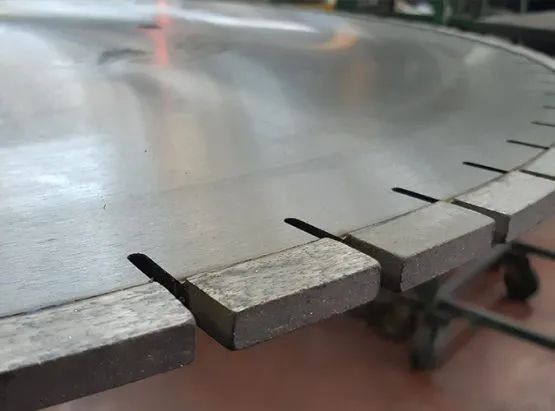
Hot Pressing vs Cold Pressing and Sintering
Diamond tool segments are manufactured through two primary routes: hot pressing (simultaneous application of pressure and temperature in a graphite mould) and cold pressing followed by free sintering in a furnace. Each route places different demands on the metal powder. Hot pressing typically operates at 750-950 degrees C under pressures of 20-35 MPa, with cycle times of 3-5 minutes per segment. The powder must flow well into the mould, achieve full density at the processing temperature, and develop adequate bonding to the diamond crystals during the short thermal cycle. Cold pressing requires higher green strength from the powder compact, since the segment must survive handling and transfer to the sintering furnace without cracking. Sintering temperatures are typically 800-1000 degrees C in hydrogen or nitrogen atmosphere for 30-60 minutes. Pre-alloyed powders offer significant advantages in both routes because their homogeneous composition ensures uniform sintering shrinkage and predictable final dimensions. MEPOSO pre-alloyed bond powders are qualified for both hot-press and cold-press-sinter production routes.
Powder Selection Criteria for Diamond Tool Formulators
When evaluating metal powder for diamond tool matrices, formulators should verify several critical parameters. Particle size distribution must match the consolidation route: hot pressing typically requires D50 of 15-30 micrometres, while cold pressing benefits from finer powders with D50 of 8-15 micrometres for better green strength. Apparent density affects mould filling consistency: powders with higher apparent density fill moulds more uniformly, reducing segment-to-segment variation. Chemical composition must be certified by the supplier with certificate of analysis for every batch, including main alloying elements and critical impurities such as oxygen and carbon. Sintering response should be characterised by the supplier, including recommended temperature range, atmosphere requirements and expected shrinkage. Diamond compatibility must be verified: some matrix compositions can chemically attack diamond at sintering temperature, causing graphitisation and catastrophic loss of cutting performance. MEPOSO provides full technical documentation for all diamond tool bond powders, including sintering curves, recommended processing parameters and diamond compatibility data.
Contact MEPOSO to discuss pre-alloyed bond powders, cobalt-free alternatives and diamond tool matrix solutions. Technical samples and sintering data available.