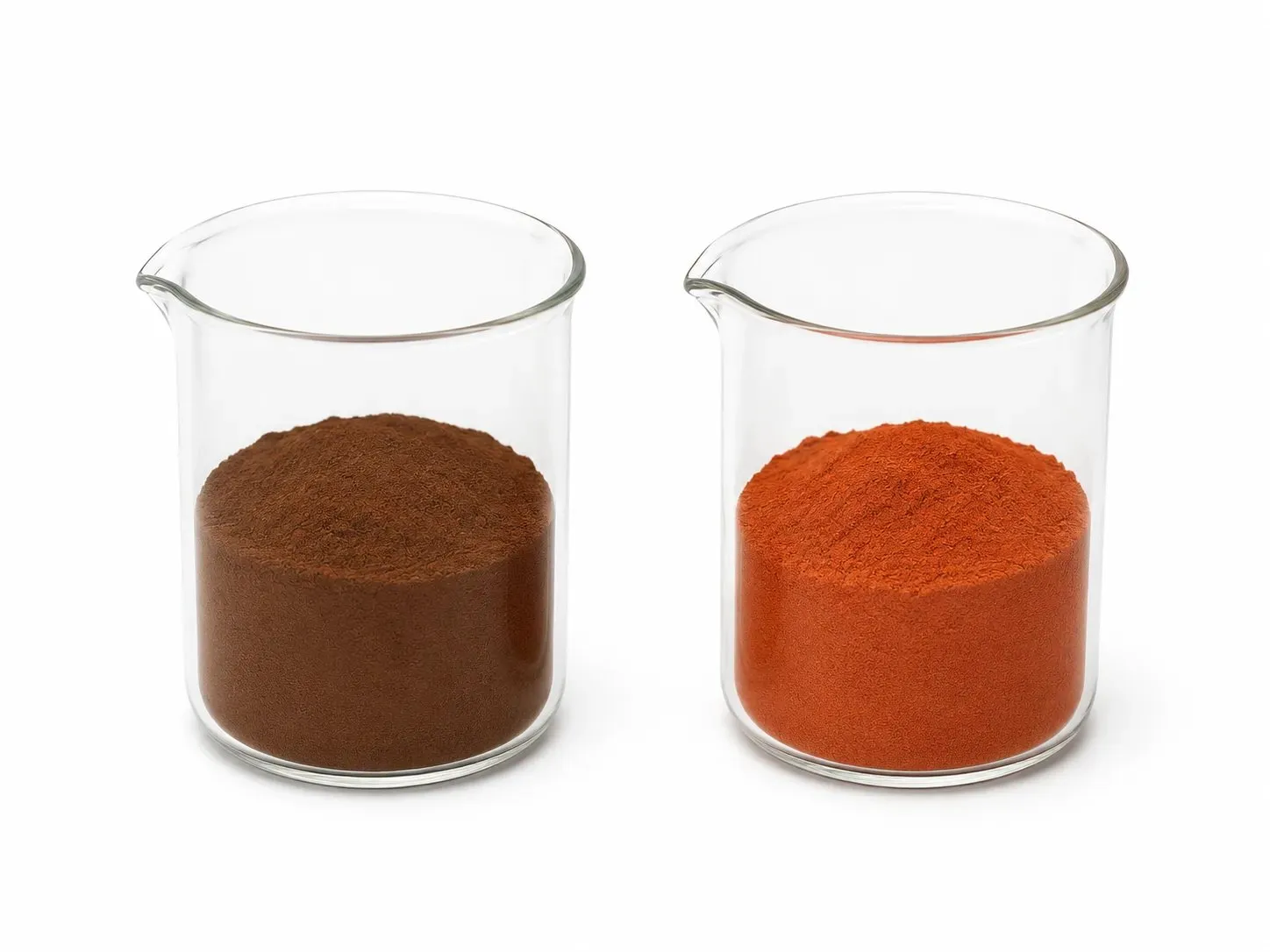
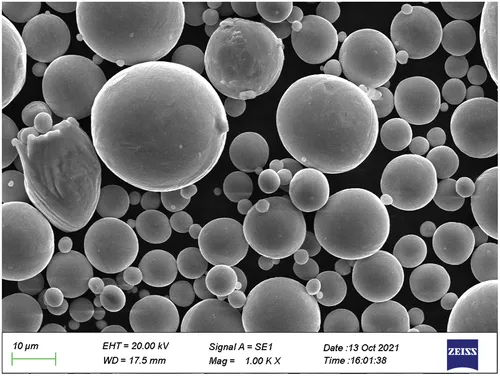
When metal powders are combined with resin binders, the result extends far beyond simple visual sparkle. Decorative resin systems use copper, brass, bronze, aluminium and specialty metallic powders to build surfaces with genuine metallic depth, cold-metal tactile quality and controlled finishing routes for interior design, furniture, wall panels, architectural details and artistic installations. Unlike metallic paints or vacuum-deposited films, a metal-powder-loaded resin system contains a high volume fraction of actual metal, which means the cured surface can be sanded, brushed, patinated, polished or chemically treated to reveal a finish that looks, feels and ages like real metal. This article examines the technical factors that determine success in decorative resin formulations: alloy selection, particle size distribution, loading level, sedimentation management, curing compatibility and post-cure finishing techniques. MEPOSO, based in Milano, Italy, supplies copper, brass and bronze powders specifically characterised for decorative resin applications, with the particle size control and batch consistency that professional formulators require.
Why Metal Powders in Decorative Resins Outperform Metallic Paints
Metallic paints and coatings contain thin aluminium or mica flakes suspended in a binder at low concentrations, typically 5 to 15 percent by weight. These flakes orient parallel to the surface during application, creating a reflective, glittery appearance that is immediately recognisable as a coating rather than a solid metal surface. The visual effect is superficial: the surface cannot be sanded, brushed or patinated without destroying the metallic illusion, because beneath the flake layer there is only plain polymer. Metal-powder-loaded resin systems are fundamentally different. They contain 50 to 80 percent metal powder by weight, creating a composite where metal particles are distributed throughout the entire thickness of the cured layer. When the surface is sanded or machined, fresh metal is exposed at every depth, giving the material the visual and tactile characteristics of solid metal. The surface can be wire-brushed to reveal texture, chemically patinated to develop verdigris or aged copper tones, buffed to a mirror polish, or left with a natural matte finish. This depth of metal content also gives the surface thermal conductivity that feels cold to the touch, reinforcing the perception of genuine metal. For designers specifying wall panels, reception desks, furniture surfaces, bathroom elements, lighting fixtures or architectural features, the difference between a metallic paint and a metal-loaded resin is the difference between imitation and authentic material expression.
Alloy Selection: Copper, Brass and Bronze for Different Effects
Each alloy family produces a distinct colour palette and aging behaviour that designers select based on the desired aesthetic outcome. Copper powder delivers a warm, reddish-pink surface that develops a rich brown patina naturally over time, or can be chemically accelerated to produce green verdigris characteristic of aged copper roofing and sculpture. Copper is the preferred choice for warm, heritage-inspired interiors, bathroom surfaces and artistic installations where the surface is expected to evolve visually over its service life. Brass powder, typically CuZn30 or CuZn37, produces a warm golden-yellow surface that mimics polished brass hardware. It can be sealed to maintain its bright appearance or allowed to develop a subtle darkening over time. Brass is popular for furniture accents, signage, retail fixtures and surfaces where a contemporary metallic warmth is desired. Bronze powder, typically CuSn10 or similar tin-bronze compositions, produces a muted, warm brown surface with an antique character that suits traditional and artisan-style interiors. Bronze develops a complex patina that many designers find more sophisticated than the brighter copper or brass tones. Mixing different alloy powders in controlled ratios allows formulators to create custom colour targets that fall between these pure alloy appearances, providing designers with a palette that standard paint systems simply cannot replicate.
Particle Size Distribution and Its Effect on Surface Appearance
Particle size is the single most influential variable in determining the final surface appearance of a metal-loaded decorative resin. Fine powders below 45 micrometres produce smooth, homogeneous surfaces with a uniform metallic appearance that closely mimics solid sheet metal. The small particles pack densely, minimise interparticle voids and create a continuous metallic surface after sanding. Fine powders are preferred for high-end furniture surfaces, bathroom countertops and any application where a refined, contemporary aesthetic is required. Medium powders in the 45 to 150 micrometre range create surfaces with visible metallic grain that gives a handcrafted or artisan quality. Individual particles are distinguishable under close inspection, adding visual complexity and a textured feel. This grade suits decorative wall panels, reception areas and architectural features where visual interest at close range is desired. Coarse powders above 150 micrometres produce bold, granular surfaces with pronounced metallic texture that works well in large-scale installations, exterior cladding and industrial-style interiors. The larger particles create stronger visual depth and more dramatic effects when sanded or brushed. Bimodal particle size distributions, combining a fine fraction with a coarser fraction, allow formulators to achieve surfaces that combine the smoothness of fine particles with the visual depth of larger ones, providing the best of both worlds for demanding design specifications.
Sedimentation Control and Uniform Distribution in Cast Systems
Metal powders are substantially denser than cured resin, with copper at 8.9 g/cm3 and brass at approximately 8.5 g/cm3 compared to epoxy at 1.1 to 1.2 g/cm3. This density difference means that in any liquid resin system, metal particles will tend to settle to the bottom before the resin cures, creating an uneven distribution that shows as colour variation, inconsistent surface properties and poor finishing results. Managing sedimentation is one of the most critical practical challenges in decorative resin formulation. Several strategies are employed. First, resin viscosity management: using higher-viscosity resin systems or adding thixotropic agents such as fumed silica or organoclays creates a yield stress that prevents particle settling. The resin must be fluid enough to pour and degas but viscous enough to suspend particles during the gel time. Second, particle size optimisation: finer particles settle more slowly according to Stokes' law, so using powders with D50 below 45 micrometres significantly extends the available working time before sedimentation becomes visible. Third, staged pouring: applying the metal-loaded resin in multiple thin layers rather than a single thick pour reduces the settling distance and ensures more uniform distribution. Fourth, cure schedule acceleration: selecting faster-curing hardener systems reduces the time during which sedimentation can occur, though this must be balanced against pot life requirements and exotherm management.
Patina Development and Chemical Finishing Techniques
One of the most valued properties of metal-loaded decorative resins is the ability to develop authentic patina through natural aging or accelerated chemical treatment. Because the cured surface contains real metal particles exposed at the surface, it responds to chemical reagents in the same way as solid metal, producing patina effects that are chemically identical to those found on natural copper, brass or bronze surfaces. For copper-loaded resins, liver of sulphur solutions produce dark brown to black colouration, while ammonia vapour in the presence of salt creates the blue-green verdigris that is characteristic of aged copper structures. Ferric chloride solutions produce rich brown tones that can be controlled by concentration and exposure time. For brass-loaded resins, ammonium chloride solutions create a range of gold-to-brown antique effects, while selenium dioxide produces dark grey-black colouration. Bronze-loaded surfaces respond to a wide range of traditional patina chemistry. The key to successful patination of metal-loaded resin surfaces is ensuring adequate metal exposure at the surface. This typically requires sanding with 120 to 400 grit abrasive to remove the resin-rich skin layer and expose fresh metal particles. After patination, a clear sealer coat of wax, lacquer or polyurethane preserves the patina and prevents further oxidation unless continued aging is desired. MEPOSO supplies powders with the particle morphology and surface chemistry that promote strong patina development.
Application Fields: From Interior Design to Architectural Installations
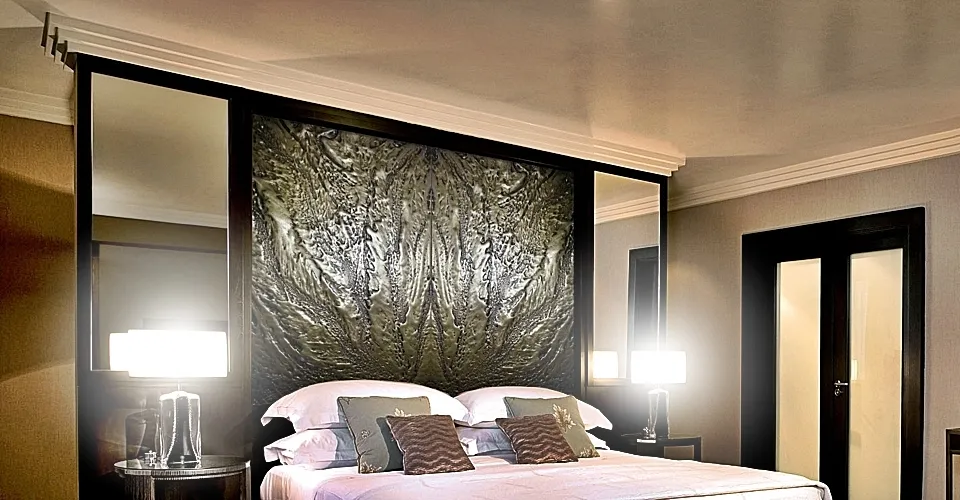
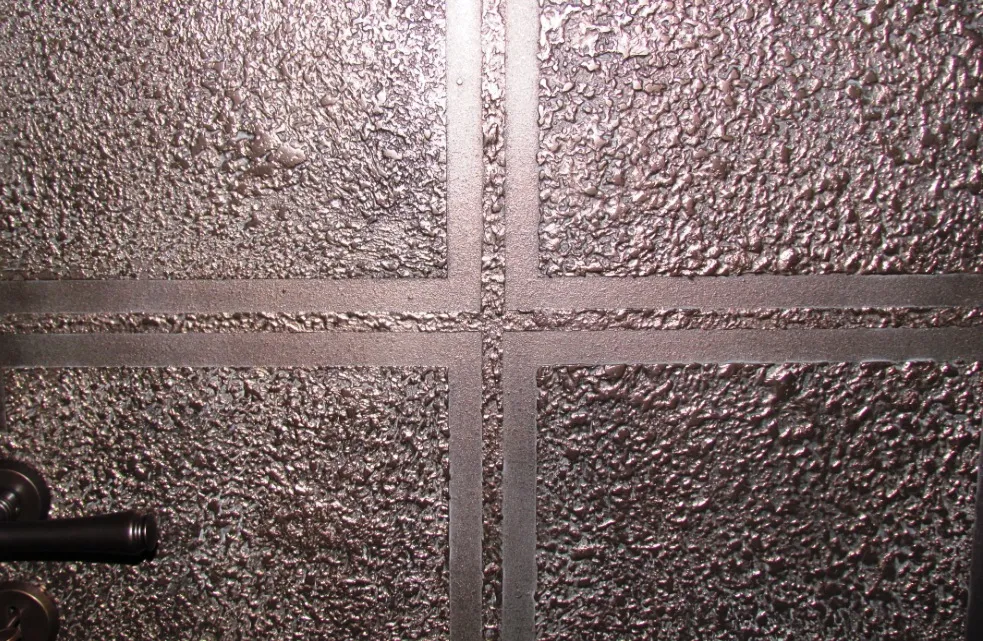
Metal-loaded decorative resins have found commercial adoption across a wide range of design and architectural applications. Decorative wall panels for hotel lobbies, corporate offices and retail environments use metal-loaded resin to create feature walls with genuine metallic character at a fraction of the weight and cost of solid metal cladding. Reception desks and countertops benefit from the durability and repairability of metal-resin composites, as scratches can be sanded and re-finished rather than requiring complete panel replacement. Furniture surfaces including table tops, cabinet fronts and shelf elements gain a premium, tactile metallic quality that laminates and veneers cannot match. Bathroom surfaces for vanity tops, shower walls and decorative panels exploit the water resistance of the resin matrix combined with the antimicrobial properties of copper and its alloys. Lighting fixtures and decorative elements use metal-loaded resin for complex shapes that would be prohibitively expensive to fabricate from solid metal. Exhibition stands and retail displays use the material for rapid production of custom metallic surfaces. Artistic installations and sculpture benefit from the freedom to create large, lightweight, metal-surfaced forms. Signage and branding elements use the material for dimensional lettering and logos with authentic metallic finishes. In all these applications, the quality of the metal powder directly determines the quality of the finished surface.
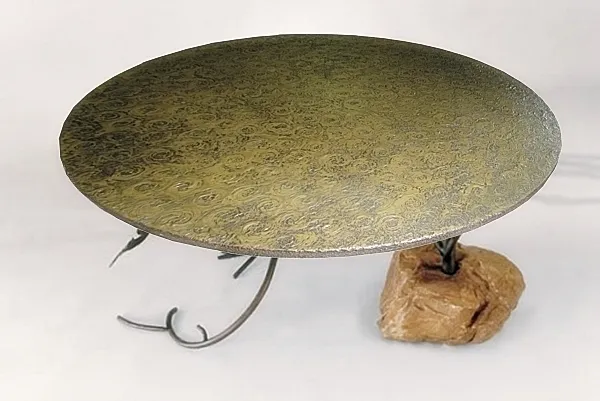
MEPOSO Metal Powders for Decorative Resin Formulations
MEPOSO supplies copper, brass and bronze powders for decorative resin applications from its production facility in Milano, Italy. The product range covers multiple particle size grades specifically designed for resin systems, from fine powders below 45 micrometres for smooth, premium surfaces to coarser grades for textured, artisan-style effects. Each grade is produced with controlled particle morphology that promotes good dispersion in resin matrices, consistent sedimentation behaviour and strong surface response to sanding, brushing and patination. Copper powders are available in electrolytic dendritic and water-atomised irregular morphologies, each offering different packing characteristics and surface textures. Brass powders in CuZn30 and CuZn37 compositions are supplied in multiple cuts to match specific application requirements. Bronze CuSn10 powders provide the warm, antique brown tones preferred for heritage-style applications. MEPOSO works directly with resin formulators and design studios to optimise powder specifications for specific projects, providing technical guidance on loading levels, particle size selection, sedimentation management and finishing compatibility. Sample quantities are available for formulation trials and design prototyping. All products are supplied with certificates of analysis documenting chemical composition, particle size distribution and apparent density, ensuring batch-to-batch consistency for production-scale operations.
Contact MEPOSO for copper, brass and bronze powders for decorative resin systems, with technical support on particle size selection, sedimentation management and finishing compatibility.