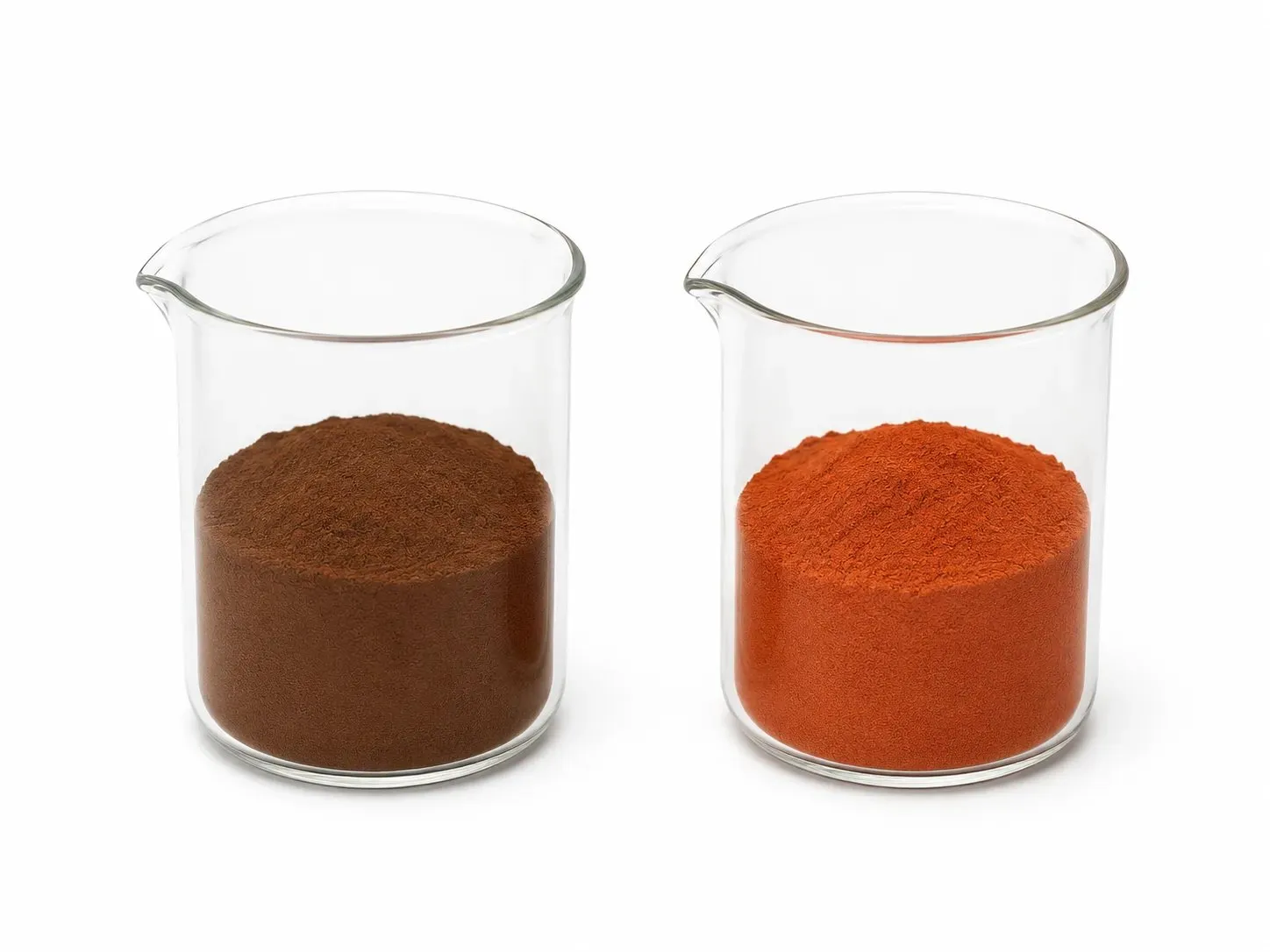
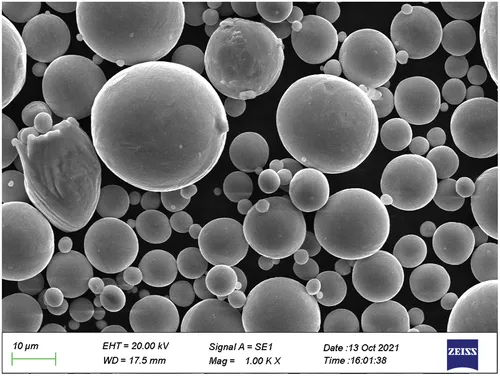
Atomization is the dominant industrial process for converting molten metal into powder. A stream of liquid metal is broken into fine droplets by a high-energy medium, and those droplets solidify into particles whose shape, size distribution and surface chemistry are determined largely by the atomization medium and process parameters. The three principal routes - water atomization, gas atomization and air atomization - produce powders with markedly different characteristics, and selecting the wrong route for a given application can mean failed qualification, wasted material and production downtime. For industrial buyers of copper, tin, bronze and other non-ferrous powders, understanding these differences is not academic: it directly affects purchasing decisions, process stability and total cost of ownership. MEPOSO, based in Milano, Italy, produces and supplies atomized metal powders across all three routes. This article provides a direct technical comparison to help engineers and procurement professionals match the right atomization method to their specific downstream requirements.
Water Atomization: High Throughput and Irregular Morphology
Water atomization uses high-pressure water jets to break a stream of molten metal into droplets. The extremely high cooling rate - typically 10,000 to 100,000 degrees Celsius per second - causes rapid solidification that freezes the irregular shapes created by the violent mechanical interaction between water and liquid metal. The resulting particles are characteristically angular, ligamental and irregular, with rough surfaces that provide excellent mechanical interlocking when compacted. This morphology makes water-atomized powders the preferred choice for press-and-sinter powder metallurgy, where green strength and compressibility are critical. Water-atomized copper powder, for example, achieves apparent densities in the range of 2.2 to 3.2 g/cm3, significantly lower than gas-atomized equivalents, because the irregular shape creates more void space between particles. This lower apparent density is actually beneficial for many PM applications because it allows higher green density to be achieved at moderate compaction pressures. However, the direct contact between water and hot metal introduces oxygen. Typical oxygen levels in water-atomized copper powders range from 0.15% to 0.40%, depending on particle size and post-atomization handling. For applications where oxide content must be minimized, this represents a significant limitation. The cost advantage of water atomization is substantial: throughput rates of 500 to 2,000 kg per hour are achievable on industrial equipment, with simpler infrastructure requirements than gas atomization. For buyers whose applications tolerate or benefit from irregular morphology, water atomization delivers the best balance of economy and performance.
Gas Atomization: Spherical Particles and Low Oxide Content
Gas atomization employs an inert gas - typically nitrogen or argon - to break the molten metal stream into droplets. Because the cooling rate is lower than in water atomization (typically 100 to 10,000 degrees per second), surface tension forces have more time to pull the droplets into spherical shapes before solidification. The inert atmosphere also prevents oxidation during the atomization process, resulting in oxygen levels that can be as low as 0.01% to 0.05% for copper powders - an order of magnitude lower than water-atomized equivalents. The spherical morphology of gas-atomized powders delivers superior flowability, measured by Hall flow rates typically between 20 and 35 seconds per 50 grams. This makes gas-atomized powders essential for applications requiring consistent powder feeding, such as thermal spraying, metal injection moulding (MIM) and additive manufacturing (selective laser melting, electron beam melting). The apparent density is correspondingly higher, typically 4.0 to 5.0 g/cm3 for copper, because spherical particles pack more efficiently. However, gas atomization has significant cost implications. Inert gas consumption is substantial, throughput rates are typically 50 to 300 kg per hour (far lower than water atomization), and the equipment is more complex. The resulting powder can cost two to five times more per kilogram than water-atomized material of the same nominal chemistry. For applications where sphericity and low oxygen are mandatory requirements, gas atomization remains the benchmark. For applications that do not strictly require these properties, the cost premium may be difficult to justify.
Air Atomization: The Practical Middle Ground
Air atomization occupies a position between water and gas atomization in terms of particle characteristics and cost. Compressed air or enriched air is used as the atomizing medium, producing particles that are semi-spherical to slightly irregular - rounder than water-atomized powder but not as perfectly spherical as gas-atomized material. The oxygen content falls between the two extremes, typically 0.05% to 0.20% for copper powders, because the atomizing medium contains oxygen but delivers lower energy transfer than pressurized water. This makes air atomization unsuitable for applications requiring the lowest possible oxygen levels but adequate for many industrial processes where moderate oxide content is acceptable. The apparent density of air-atomized copper powders typically ranges from 3.0 to 4.2 g/cm3, again intermediate between water and gas routes. Flowability is good - better than water-atomized powder - making air-atomized grades suitable for volumetric powder feeding in automated production lines. Cost-wise, air atomization is significantly cheaper than gas atomization because compressed air is far less expensive than argon or nitrogen, and throughput rates of 200 to 800 kg per hour are achievable. For many industrial applications - including brazing pastes, friction materials, diamond tool matrices and PTFE filling - air-atomized powder represents the optimal balance of particle properties and procurement cost. MEPOSO recommends air atomization as the default starting point for applications where neither maximum sphericity nor maximum irregularity is the defining requirement.
Particle Size Control Across Atomization Routes
Particle size distribution (PSD) is a critical specification for every metal powder application, and each atomization route offers different capabilities and limitations in terms of achievable particle size ranges. Water atomization is particularly effective for producing coarse to medium powders in the range of 45 to 300 micrometres. The high energy of the water jets ensures efficient breakup of the metal stream, and the rapid solidification freezes particles at relatively large sizes. Producing very fine powders below 20 micrometres by water atomization is possible but less efficient, with lower yields and higher processing costs. Gas atomization excels at producing fine and ultra-fine powders. The controlled gas flow and lower cooling rates allow production of powders from 10 to 150 micrometres with tight distribution control. For additive manufacturing applications requiring 15-45 micrometre or 20-63 micrometre fractions, gas atomization is typically the only practical route. Air atomization produces powders primarily in the 20 to 200 micrometre range, with good distribution control in the 45-150 micrometre band that is most commonly used in industrial applications. For all three routes, the as-atomized powder undergoes classification by sieving and air classification to produce the specific particle size cuts required by customers. MEPOSO maintains classification equipment that can deliver standard and custom particle size distributions to match specific process requirements, regardless of the atomization route used.
Oxide Content and Surface Chemistry Implications
The oxide content of a metal powder is not simply a purity metric - it fundamentally affects how the powder behaves in downstream processes. Surface oxides influence sintering kinetics, wetting behaviour in brazing and soldering, electrical and thermal conductivity of the final part, and the rheological stability of paste formulations. In water-atomized copper powders, the oxide layer is thicker and less uniform, consisting primarily of Cu2O with some CuO on the outermost surface. This oxide layer can be beneficial in some applications - for example, it improves the bond strength in friction materials - but detrimental in others, such as electronic connections where maximum conductivity is required. Gas-atomized powders, processed under inert atmosphere, develop only a very thin native oxide layer upon exposure to air during handling. This minimal oxide makes them ideal for applications requiring clean metal-to-metal contact, such as thermal spray coatings and conductive pastes. Air-atomized powders fall in the intermediate zone. The oxide layer is thicker than gas-atomized but thinner and more consistent than water-atomized material. For many industrial applications, this oxide level represents a practical working range that does not impair performance while keeping costs manageable. Post-atomization treatments such as reduction annealing in hydrogen atmosphere can reduce oxide content in water and air-atomized powders, but this adds processing cost and must be specified at the time of ordering. MEPOSO provides detailed oxide analysis data on certificates of analysis for every batch shipped.
Apparent Density and Flowability: Why They Matter for Process Design
Apparent density and flowability are not standalone specifications - they are interconnected properties that directly determine how a powder performs in automated production equipment. Apparent density (measured per ASTM B212 or ISO 3923) defines how much powder fits into a given volume, which affects die filling in pressing, paste loading in screen printing, and material consumption rates in thermal spraying. A powder with higher apparent density fills dies more consistently but may produce lower green density ratios in compaction because spherical particles have less interlocking capacity. Flowability (measured by Hall flowmeter per ASTM B213 or Carney funnel) determines whether the powder can be reliably delivered to the point of use in automated systems. Gas-atomized spherical powders flow readily and produce consistent volumetric feeds. Water-atomized irregular powders may require vibration-assisted feeding or modified hopper designs. Air-atomized semi-spherical powders typically flow adequately for most industrial equipment without special measures. When selecting an atomization route, industrial buyers should specify apparent density and flowability requirements alongside chemistry and particle size, because these properties cannot be easily adjusted after atomization. The atomization route largely determines them. MEPOSO provides Hall flow and apparent density data on every certificate of analysis and can supply trial quantities for process validation before committing to production volumes.
Cost Analysis: Total Cost of Ownership Beyond Price Per Kilogram
The price per kilogram of metal powder varies dramatically by atomization route: water-atomized copper powder may cost 8-15 EUR/kg, air-atomized 12-25 EUR/kg, and gas-atomized 25-60 EUR/kg, depending on particle size specification and order volume. However, price per kilogram is a misleading metric if taken in isolation. The total cost of ownership includes material waste rates, process reject rates, equipment wear, energy consumption in downstream processing, and the cost of qualification and re-qualification if a supplier or route change is required. Water-atomized powder may be cheapest per kilogram, but if a thermal spray application requires extensive post-processing to achieve the needed coating density, the total cost may exceed that of using gas-atomized powder that produces the right coating in a single pass. Similarly, gas-atomized powder for a press-and-sinter application may deliver marginal improvements in density that do not justify its three-to-five-times price premium over water-atomized material that performs adequately. The most economical approach is to match the atomization route to the minimum quality requirements of the application. Over-specifying powder quality wastes procurement budget. Under-specifying leads to process failures and rejected parts. MEPOSO works with industrial customers to identify the optimal atomization route for each application, balancing technical requirements against total cost of ownership rather than simply offering the cheapest or most expensive option.
Selecting the Right Route: MEPOSO Decision Framework
The choice between water, gas and air atomization should be driven by the technical requirements of the end application, not by tradition or assumption. MEPOSO recommends a structured evaluation based on five key criteria: morphology requirement (does the process need spherical, semi-spherical or irregular particles?), maximum allowable oxygen content, required particle size distribution, apparent density and flowability targets, and annual volume and budget constraints. For press-and-sinter powder metallurgy, water atomization is almost always the optimal choice because irregular morphology delivers superior green strength and compressibility at the lowest cost. For additive manufacturing and thermal spraying, gas atomization is typically required because sphericity and low oxygen are non-negotiable. For brazing pastes, friction materials, diamond tools and PTFE compounds, air atomization frequently provides the best overall value, delivering adequate sphericity and oxide control at intermediate cost. MEPOSO produces copper, tin, bronze and specialty alloy powders by water, gas and air atomization at its Milano facility. Our technical team works directly with customers to evaluate application requirements, recommend the appropriate atomization route, and supply trial quantities for process validation before committing to production-scale orders. Contact MEPOSO to discuss your specific powder requirements and receive a technical recommendation based on your application, not just a price quote.
Contact MEPOSO to compare atomization routes for your application, request technical data sheets and certificates of analysis, or arrange trial powder samples for process validation.