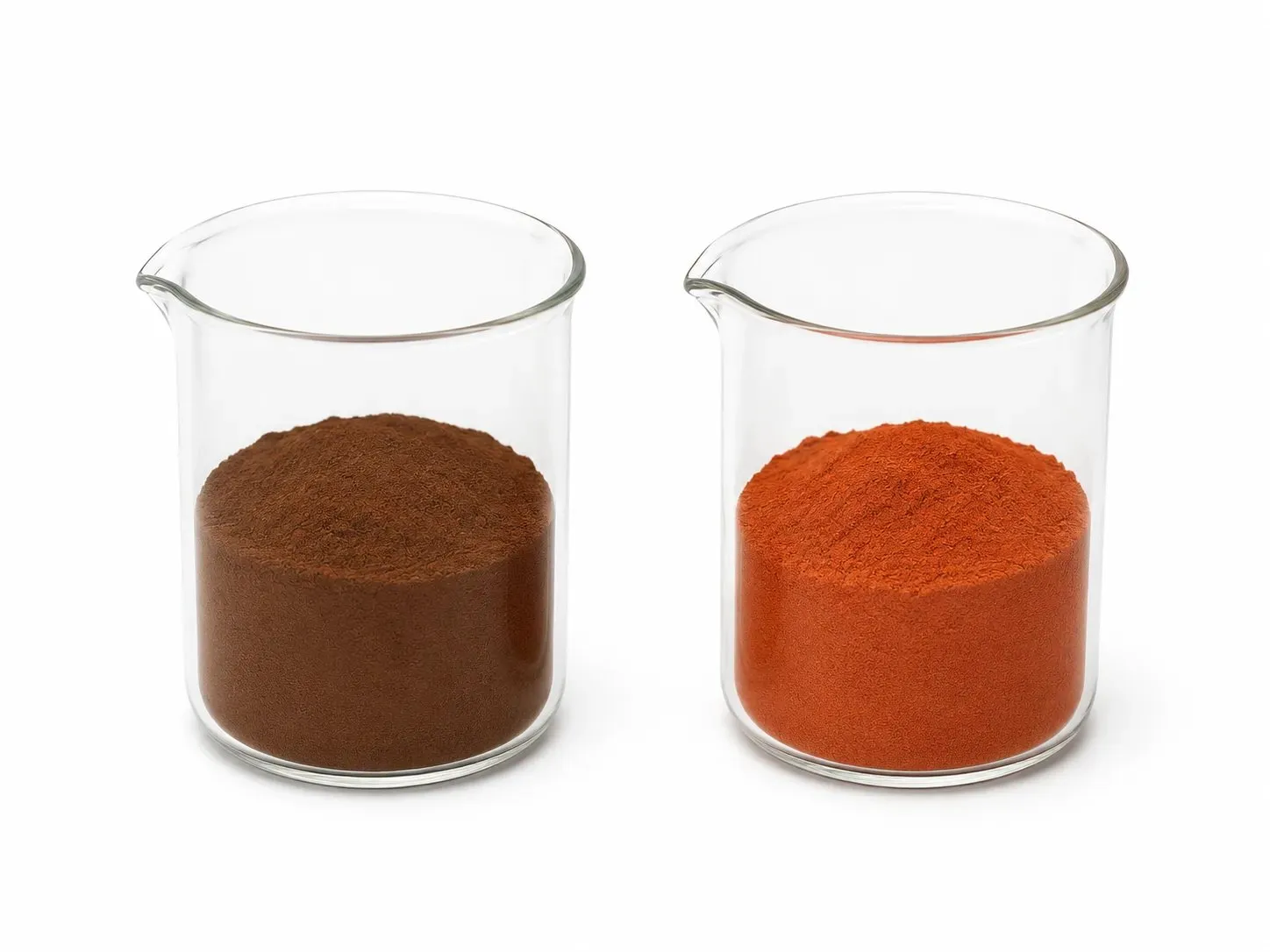
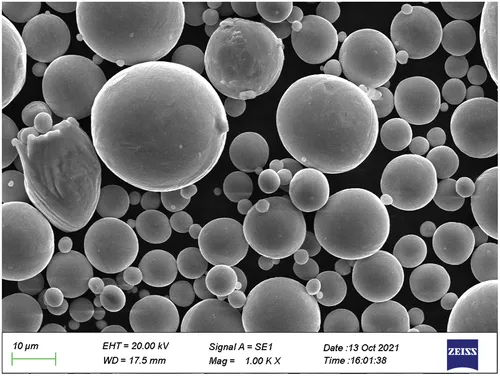
Copper and alloy powders used in brazing or soldering routes are usually judged by chemistry first, but real production performance depends on more than alloy percentage. Particle size distribution, oxide control and morphology strongly influence wetting behaviour, flow characteristics, joint fill and final assembly consistency. A powder that meets the chemical specification but has inconsistent particle size or excessive surface oxide can produce joints with voids, incomplete fill or variable strength. For paste formulations, the powder must also be compatible with the flux system and maintain stable rheology during storage and dispensing. MEPOSO supplies copper, bronze and pre-alloy powders for brazing and soldering applications with controlled particle size, low oxide content and documented batch consistency.
Particle Size Distribution for Paste and Powder Applications
The optimal particle size depends on the application method. For brazing paste formulations used in automated dispensing or screen printing, fine powders with D50 of 10-25 micrometres and D90 below 45 micrometres are typically required. The narrow size distribution ensures uniform paste viscosity, consistent print deposits and predictable melting behaviour. For manual brazing with powder application or ring preforms, coarser powders (D50 of 30-75 micrometres) may be acceptable. In all cases, the absence of oversized particles is critical: even a small fraction of particles above the specification limit can cause nozzle blockage in dispensing equipment or irregular melting in the joint. MEPOSO production includes sieving and classification steps with verified particle size distribution for every batch.
Oxide Control and Its Impact on Joint Quality
Surface oxide on metal powder particles directly affects brazing and soldering performance. Excessive oxide acts as a barrier to wetting, preventing the molten filler metal from flowing into and filling the joint gap. It can also generate gas during heating, causing porosity in the finished joint. For copper powders used in brazing, oxygen content below 0.3% is typically required for good wetting in hydrogen atmosphere brazing. For tin-based solder powders, low oxide is essential for paste stability and consistent reflow behaviour. MEPOSO controls oxide content through atomisation atmosphere management, proper powder handling and sealed packaging, with oxygen content documented on every certificate of analysis.
MEPOSO Powders for Brazing and Soldering
MEPOSO supplies copper, bronze, copper-phosphorus and copper-nickel powders for brazing applications, as well as tin and tin alloy powders for soldering. All powders are produced with controlled particle size, documented chemistry, low oxide content and full batch traceability. Contact MEPOSO to discuss your specific brazing or soldering powder requirements.
MEPOSOにご連絡ください。