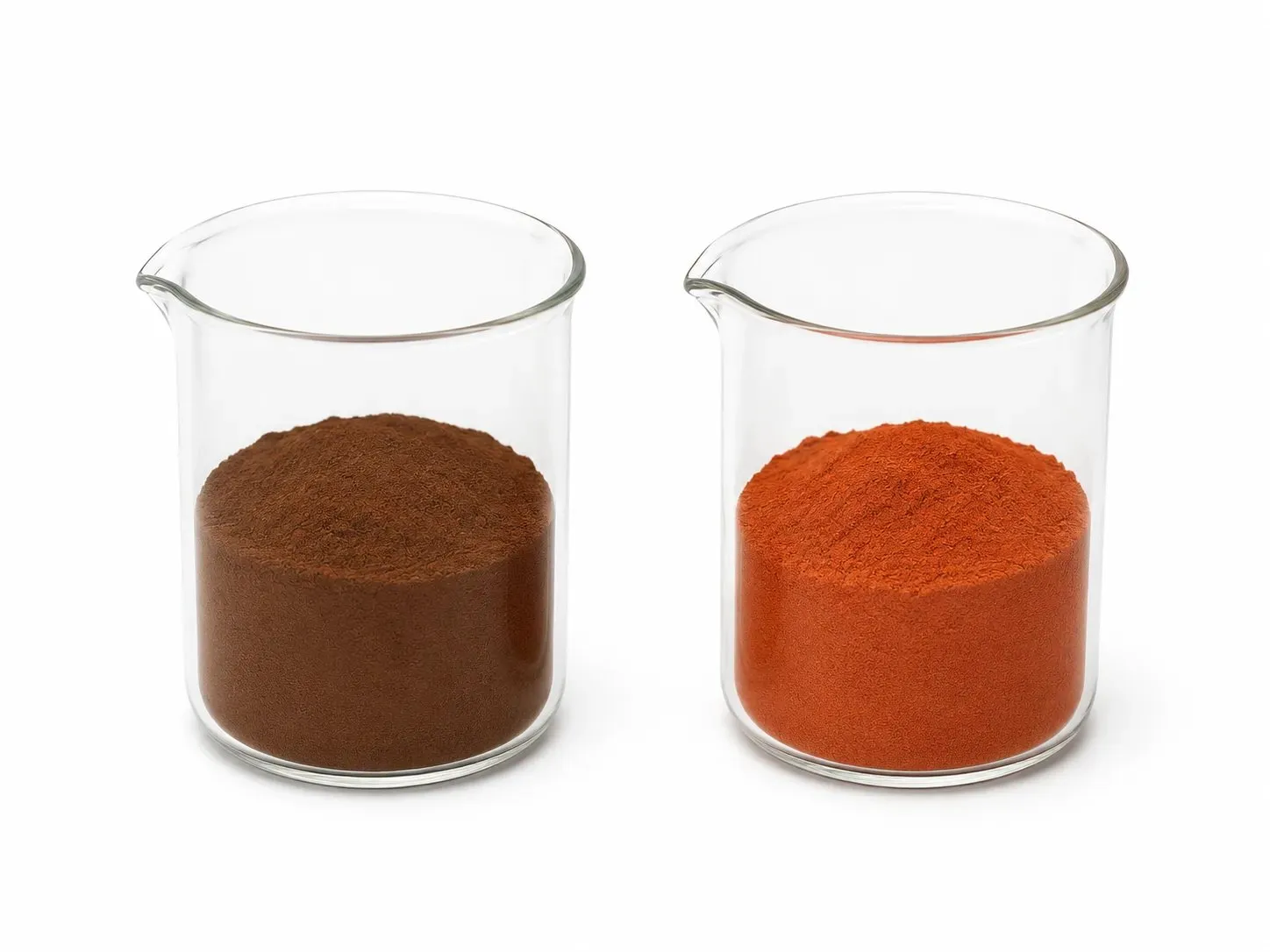
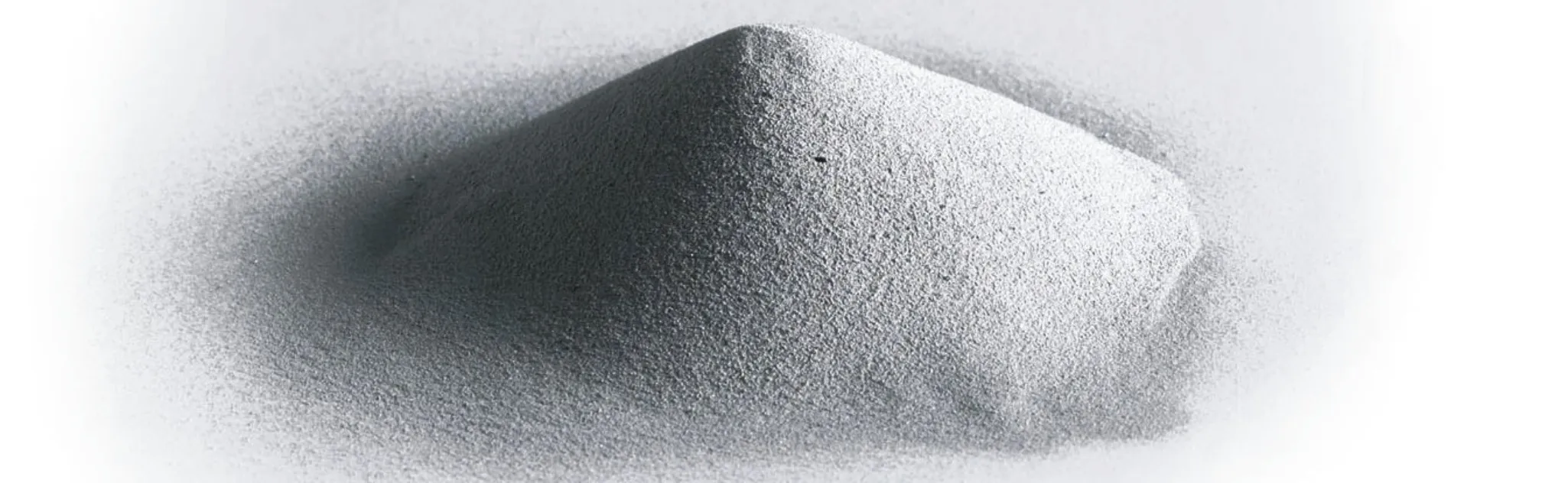
Laser diffraction is the most widely used method for measuring particle size distribution (PSD) of metal powders. The technique measures the angular distribution of light scattered by particles passing through a laser beam, then uses mathematical models to calculate the equivalent sphere diameter distribution. Results are typically reported as D10, D50 and D90 values representing the 10th, 50th and 90th percentile of the volume-weighted distribution. For powder metallurgy applications, D50 typically ranges from 20-75 micrometres, while additive manufacturing applications require tighter distributions with D50 of 15-45 micrometres. The measurement is fast (seconds per sample), highly repeatable and can detect the presence of oversized or undersized particles that affect processing behaviour. MEPOSO performs laser diffraction analysis on every production batch using calibrated Malvern or equivalent instrumentation.
Apparent Density and Flowability Testing
Apparent density (measured per ASTM B212 using a Hall flowmeter funnel or per ASTM B329 using a Scott volumeter) indicates how densely the powder packs under gravity without applied pressure. This property directly affects mould filling in powder metallurgy: powders with higher apparent density fill moulds more consistently and produce more uniform green compacts. Flowability (measured as Hall flow rate per ASTM B213) indicates how freely the powder flows through a standard funnel orifice. Good flowability is essential for automated pressing where powder must flow into the die cavity quickly and consistently. For additive manufacturing, flowability determines whether the recoater blade can spread a uniform thin layer across the build platform. MEPOSO reports apparent density and Hall flow rate on certificates of analysis where relevant to the application.
SEM Morphology and Oxygen Analysis
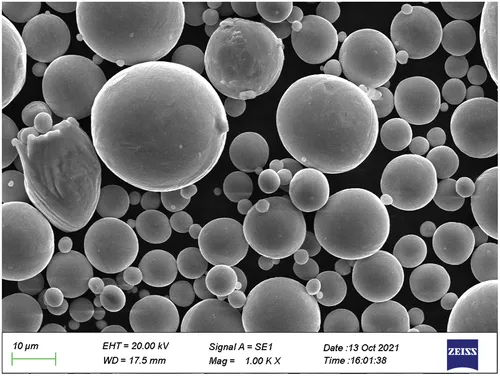
Scanning electron microscopy (SEM) provides direct visual information about particle shape, surface texture and the presence of satellites or agglomerates. Spherical particles (typical of gas atomisation) differ dramatically from irregular particles (typical of water atomisation) in their packing, flow and sintering behaviour. SEM analysis is particularly important for additive manufacturing qualification, where sphericity and surface smoothness directly affect powder bed density and laser absorption. Oxygen analysis (typically by inert gas fusion per ASTM E1019) quantifies the oxide content of the powder, which affects sintering behaviour, mechanical properties of sintered parts, and chemical compatibility in reactive applications. MEPOSO provides SEM imaging and oxygen analysis data as part of its comprehensive quality documentation for advanced manufacturing applications.
Quality Control Integration: From Atomisation to Certificate of Analysis
A comprehensive quality control system integrates all characterisation methods into a unified workflow that begins at atomisation and ends with the certificate of analysis accompanying each shipment. At MEPOSO, the quality control sequence includes: raw material verification before melting, in-process temperature and atmosphere monitoring during atomisation, sieving and classification with verified screen integrity, laser diffraction PSD measurement on classified powder, chemical analysis by XRF or ICP for alloy composition, apparent density and flow rate measurement, oxygen content analysis where specified, and SEM imaging for morphology-sensitive applications. All data is compiled into the certificate of analysis that accompanies every shipment, providing full traceability from raw material to delivered product. Contact MEPOSO for detailed quality documentation and powder characterisation data.
MEPOSOにご連絡ください。