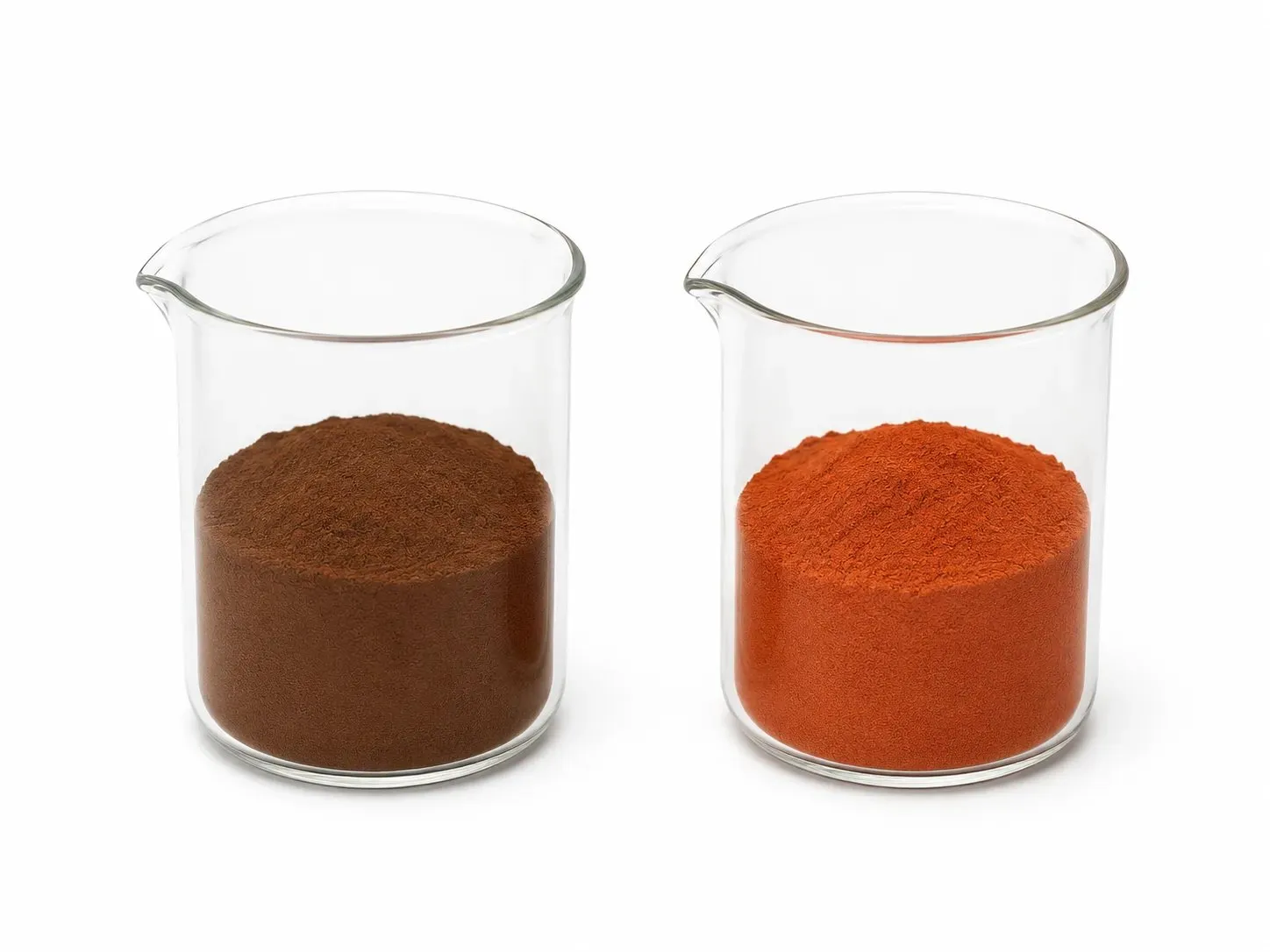
Sintered metal filters occupy a critical niche in industrial fluid handling where polymer membranes and woven wire meshes cannot survive. Chemical processing plants operating at temperatures above 300 degrees Celsius, hydraulic systems requiring absolute particulate removal without filter bypass, pharmaceutical production demanding sterilisable and validated filtration, and food-grade applications where cleanability and FDA compliance are mandatory - all these industries rely on sintered metal filter elements manufactured from carefully selected metal powders. The sintered filter works on a fundamentally different principle from woven mesh: instead of relying on a single layer of precisely sized apertures, it uses a three-dimensional network of interconnected pores created by sintering metal powder particles together at their contact points. This tortuous pore structure provides depth filtration with higher dirt-holding capacity, more uniform pore size distribution, and greater structural integrity than any woven or etched alternative. MEPOSO, based in Milano, supplies the bronze and copper powders that form the foundation of many sintered filter product lines across Europe.
How Sintered Metal Filters Work: The Pore Network Principle
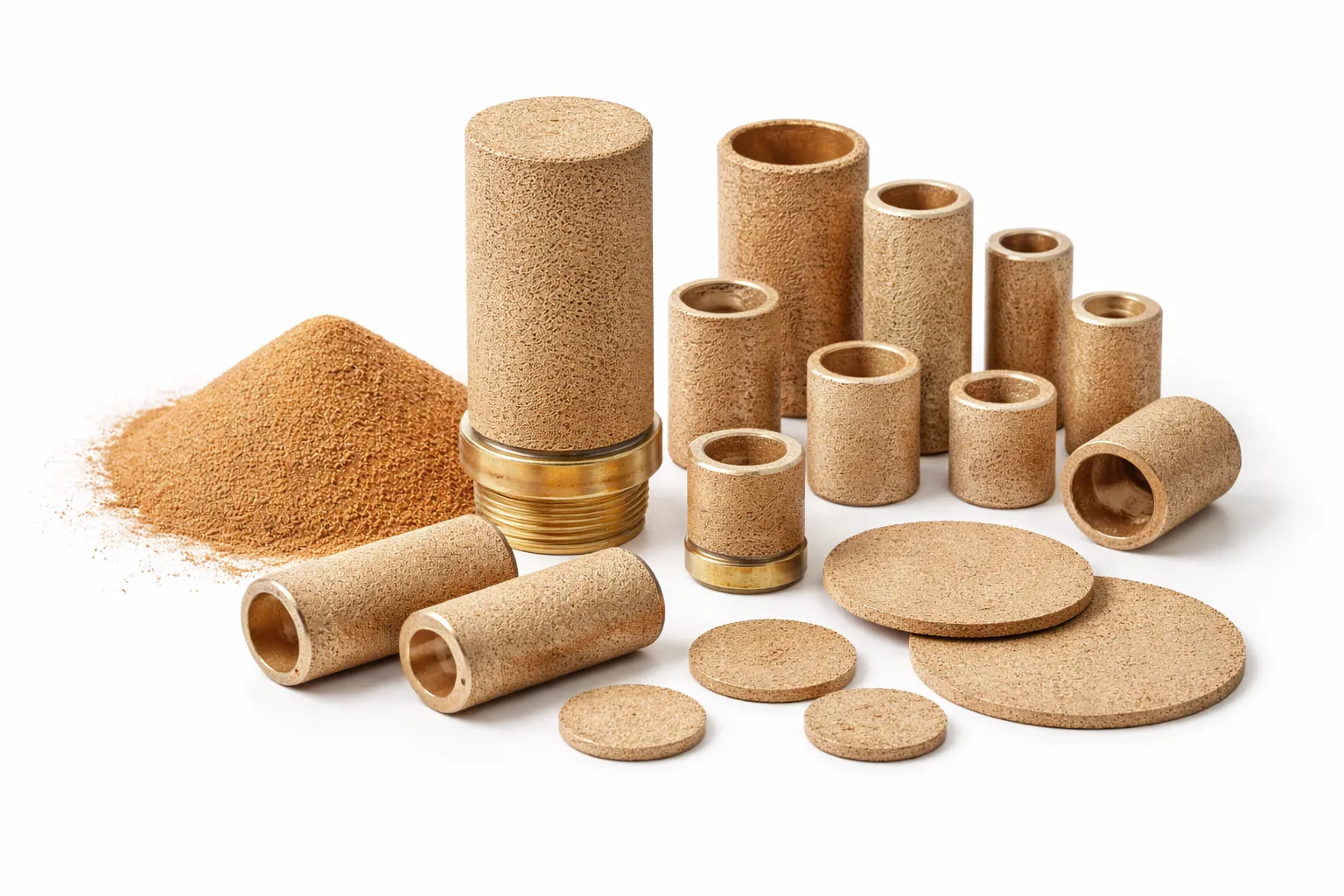
A sintered metal filter is manufactured by filling a mould with metal powder - typically bronze, stainless steel, or nickel alloy - and then sintering at a temperature high enough to create metallurgical bonds between adjacent particles but low enough to preserve a controlled volume of open porosity. Unlike a pressed structural component where the goal is maximum density, a filter element is deliberately designed to remain porous, typically retaining 30-50% open porosity after sintering. The pore structure can be visualised as a three-dimensional labyrinth of interconnected channels whose size, shape and tortuosity are determined primarily by the particle size and shape of the starting powder. When fluid passes through this pore network, particles larger than the effective pore opening are captured on the upstream surface (surface filtration), while smaller particles are trapped within the depth of the filter as they follow the tortuous path through the interconnected channels (depth filtration). This dual mechanism gives sintered metal filters a significantly higher dirt-holding capacity than screen-type filters with equivalent particle retention ratings. The bubble point test, performed by pressurising one side of a wetted filter element with gas until bubbles appear on the downstream side, provides a reliable measurement of the maximum pore size. The mean flow pore size, measured by the progressive displacement of a wetting liquid by increasing gas pressure, characterises the overall filtration efficiency. Both measurements correlate directly with the particle size distribution of the metal powder used in manufacturing - which is why powder specification is the single most important factor in filter quality.
Bronze Powders for Filtration: The Industry Standard
Tin bronze powder (typically 89-90% copper, 10-11% tin) has been the workhorse material for sintered metal filtration for over half a century. The popularity of bronze for filter applications stems from several advantageous properties: excellent corrosion resistance in water, hydraulic oils and many chemical environments; good sinterability at relatively modest temperatures (750-850 degrees Celsius); mechanical ductility that allows filter elements to withstand pressure surges without brittle fracture; and well-characterised, predictable sintering behaviour that enables consistent pore size control in production. Bronze filter elements are manufactured by gravity-filling moulds with pre-alloyed bronze powder, vibrating to achieve consistent packing density, and sintering in a reducing or inert atmosphere. The absence of pressing distinguishes filter manufacturing from most other powder metallurgy processes - the powder is sintered in the loose-fill condition to maximise porosity. This means that the apparent density and packing behaviour of the bronze powder become critically important. Spherical bronze powder produced by gas atomisation provides the most uniform packing and the most predictable pore size distribution. Irregular powder, while cheaper, creates a wider pore size distribution with some oversized channels that can compromise filtration efficiency. MEPOSO supplies pre-alloyed bronze powders in tightly controlled sieve fractions specifically graded for filter manufacturing. Standard filter grades include 40-100 mesh for coarse filtration (nominal pore ratings of 40-100 micrometres), 100-200 mesh for medium filtration (10-40 micrometres), and 200-325 mesh for fine filtration (5-15 micrometres). Custom sieve cuts can be prepared to meet specific filter manufacturer requirements.
Stainless Steel and Specialty Alloy Filters: When Bronze Is Not Enough
While bronze remains the most widely used material for sintered filters, many applications demand higher temperature resistance, superior chemical compatibility, or compliance with specific industry standards that bronze cannot meet. Stainless steel 316L powder is the primary alternative, offering operating temperatures up to 500-600 degrees Celsius (versus approximately 250 degrees for bronze), excellent resistance to a wide range of acids, alkalis and solvents, and compliance with pharmaceutical and food-grade standards. Sintering stainless steel filters requires higher temperatures (1,100-1,250 degrees Celsius) in vacuum or high-purity hydrogen atmosphere, which increases manufacturing cost but produces filter elements with superior strength-to-weight ratio and broader chemical compatibility. For even more extreme environments, nickel-based alloys such as Hastelloy and Inconel powders are used in sintered filter applications involving concentrated acids, high-temperature gas streams, or nuclear applications. Titanium powder filters find use in marine and chemical environments where both corrosion resistance and low weight are important. The powder metallurgy challenges increase with each material step: stainless steel powders are harder and more abrasive, requiring different tooling; nickel alloys require careful atmosphere control to prevent chromium depletion; titanium must be processed in argon or vacuum due to its extreme reactivity with oxygen and nitrogen. While MEPOSO specialises primarily in copper and bronze powders, we work with partner suppliers to provide complete powder solutions for filter manufacturers who require multi-alloy capability. Our technical team can advise on the appropriate material selection based on the specific operating conditions and regulatory requirements of the end application.
Powder Morphology and Its Impact on Filter Permeability
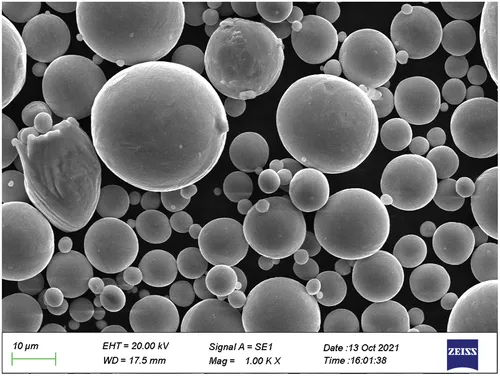
The three-dimensional shape of individual powder particles has a profound effect on the packing behaviour, pore geometry and ultimately the permeability of the sintered filter. Spherical particles, produced by gas atomisation, pack in a relatively predictable manner with porosity typically in the range of 35-40% for random close packing. The pores between spherical particles are relatively uniform in size and shape, resulting in a narrow pore size distribution and predictable filtration behaviour. This makes spherical bronze powder the preferred choice for filters requiring precise pore size ratings and reproducible bubble point values from element to element. Irregular or angular particles, produced by water atomisation or mechanical processes, pack less efficiently with higher porosity (typically 40-55%) and create a wider range of pore sizes. While this might seem disadvantageous for filtration precision, it actually offers two significant benefits: higher overall porosity means higher flow capacity at the same differential pressure, and the rough particle surfaces create stronger sinter necks at lower temperatures, producing mechanically robust filter elements. The trade-off is a wider pore size distribution, meaning that the nominal filtration rating must be specified more conservatively to account for the larger pores in the distribution tail. For applications where flow capacity is prioritised over absolute filtration precision - such as flame arrestors, breather vents, and fluid distribution elements - irregular powder offers a cost-effective solution with superior permeability. MEPOSO can supply both spherical and irregular bronze powder morphologies, allowing filter manufacturers to select the optimal balance between filtration precision and flow capacity for each product line.
Sintering Process Parameters for Optimal Filter Performance
The sintering process for filter elements requires careful balancing of two competing objectives: creating strong enough metallurgical bonds between particles to produce a mechanically sound element, while preserving sufficient open porosity and permeability for effective filtration. Over-sintering closes pores, reduces permeability and shifts the pore size distribution toward finer ratings - effectively making the filter too restrictive. Under-sintering leaves weak inter-particle bonds that may fracture during pressure cycling or backwash cleaning, releasing metal particles downstream - the worst possible failure mode for a filter element. For bronze filters, the optimal sintering window is typically 780-850 degrees Celsius in a nitrogen-hydrogen atmosphere with a dew point below minus 40 degrees Celsius. The lower end of this range produces elements with higher porosity and permeability but lower strength, suitable for low-pressure applications. The upper end produces denser, stronger elements with finer effective pore size, suitable for higher-pressure service. Sintering time at peak temperature is typically 20-45 minutes, with longer times driving further densification. The heating and cooling rates must be controlled to prevent thermal gradients that cause warping in large filter elements - a particular concern for cylindrical cartridges and disc-shaped elements with large diameter-to-thickness ratios. Continuous mesh belt furnaces are used for high-volume production of standard filter elements, while batch furnaces provide greater flexibility for custom sizes and experimental work. MEPOSO technical support can advise on sintering parameter optimisation for specific powder grades and filter geometries.
Applications Across Industries: From Hydraulics to Pharmaceuticals
Sintered metal filters serve an extraordinarily diverse range of industrial applications, each with specific requirements for pore size, material compatibility, operating pressure and temperature. In hydraulic and pneumatic systems, bronze filter elements protect sensitive components - servo valves, proportional valves and bearings - from particulate contamination that causes premature wear and malfunction. These filters typically require 10-25 micrometre retention ratings, operating pressures up to 350 bar, and the ability to withstand millions of pressure cycles without fatigue failure. In the chemical processing industry, stainless steel sintered filters handle catalyst recovery, reactor feed purification, and solvent filtration at temperatures that would destroy polymer alternatives. Pharmaceutical manufacturing uses sintered metal filters for sterile gas filtration, vent filters on fermentation tanks, and as sparger elements for controlled gas distribution into bioreactor media. The food and beverage industry relies on sintered filters for carbonation, beer filtration, and process gas purification, where cleanability by steam sterilisation and compliance with FDA/EC regulations are mandatory. In fluidisation applications, sintered metal plates serve as gas distributors that create uniform bubble patterns in fluidised bed reactors, dryers and coating equipment. Flame arrestors use sintered metal elements to prevent flame propagation through piping systems in explosive atmospheres - a safety-critical application where consistent pore size and element integrity are matters of life and death. MEPOSO bronze powders are found in filter elements serving all of these industries, with specific powder grades optimised for each application segment.
MEPOSO Bronze and Copper Powders for Filter Manufacturing
MEPOSO, headquartered in Milano, Italy, has supplied the European sintered filter industry with high-quality bronze and copper powders for decades. Our filtration-grade powders are manufactured with the tight particle size control and batch-to-batch consistency that filter manufacturers require to maintain their ISO-certified quality systems. Our standard filtration bronze powder range covers the full spectrum of filter ratings: coarse grades (150-300 micrometres) for gas distribution and flame arrestor applications, medium grades (45-150 micrometres) for general industrial filtration, and fine grades (below 45 micrometres) for pharmaceutical and food-grade applications. Each grade is supplied with a comprehensive certificate of analysis documenting chemical composition, sieve analysis to ISO 4497, apparent density to ISO 3923, and flow rate to ISO 4490. For filter manufacturers developing new products or optimising existing designs, MEPOSO offers trial quantities of custom sieve cuts, blends of different size fractions, and experimental grades with modified tin content or alternative alloying additions. Our application engineering team can review your current filter specifications and recommend powder modifications that may improve performance, reduce cost, or solve production issues. We understand that the relationship between a filter manufacturer and their powder supplier is long-term and based on trust in consistent quality - this is the foundation of MEPOSO's approach to the filtration market. Contact our Milano headquarters for technical consultation, powder samples and competitive pricing on standard and custom filtration-grade bronze powders.
Contact MEPOSO for bronze and copper filtration-grade powders, technical specifications, certificates of analysis and sintering process support for your filter manufacturing needs.