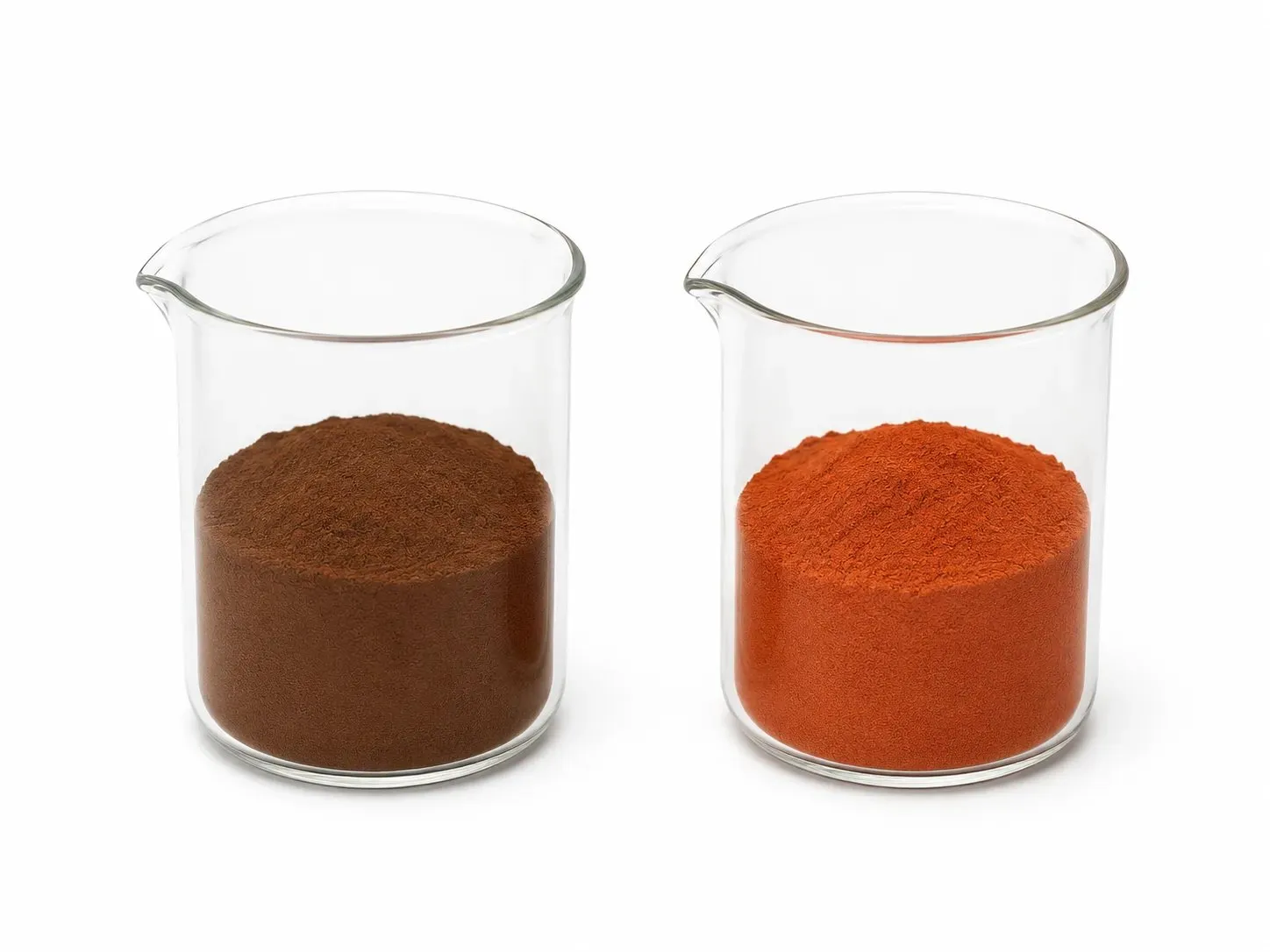
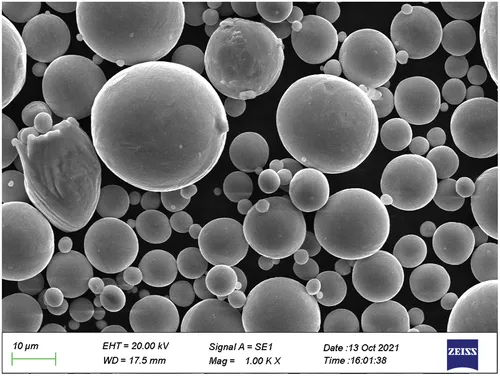
Bi-metal bearings are among the most demanding applications for pre-alloyed bronze powders. A thin layer of bronze, typically 0.3 to 1.5 mm, is sintered directly onto a low-carbon steel backing strip in a continuous belt furnace, forming a composite material that combines the structural strength of steel with the tribological properties of bronze. The resulting bi-metal strip is then formed into half-shells, bushings, thrust washers and wrapped bearings that serve in engines, transmissions, compressors, hydraulic pumps and heavy machinery across automotive, industrial and off-highway sectors. For decades, CuSn10Pb10 has been the workhorse alloy for these applications, with lead providing essential lubricity and conformability. However, regulatory pressure under EU directives and global environmental initiatives is driving a transition towards lead-free alternatives. This article examines both leaded and lead-free bronze powder grades, the sintering process, the metallurgical factors that determine bearing performance, and how MEPOSO supports bearing manufacturers with powders engineered specifically for bi-metal strip production.
The Role of Lead in Traditional Bronze Bearing Alloys
In the CuSn10Pb10 alloy system, lead serves multiple tribological functions that have made this composition the default choice for bi-metal bearings across decades of engine and machinery development. Lead is essentially immiscible in the copper-tin matrix, forming a finely dispersed soft phase throughout the sintered microstructure. This soft lead phase provides three critical bearing properties. First, conformability: lead deforms plastically under load, allowing the bearing surface to adapt to minor shaft misalignments and geometric imperfections without generating localised stress concentrations that would cause premature fatigue. Second, embeddability: the lead phase absorbs hard contaminant particles such as wear debris and casting sand that circulate in the lubricating oil. These particles embed into the soft lead rather than scoring the shaft or the bearing surface, thereby protecting both mating components. Third, emergency lubrication: under boundary lubrication conditions where the hydrodynamic oil film breaks down, the lead phase smears across the contact zone, providing a solid lubricant film that prevents catastrophic metal-to-metal seizure. The 10% lead content in CuSn10Pb10 represents a balance point: sufficient lead to deliver reliable conformability and embeddability without excessively weakening the load-carrying copper-tin matrix. Higher lead contents, such as CuPb22Sn2, are used in high-speed applications where conformability and fatigue resistance are paramount, but the reduced tin content lowers hardness and wear resistance.
CuSn10Pb10: Powder Characteristics and Sintering Behaviour
The powder used for bi-metal bearing strip production must meet stringent specifications that go far beyond basic chemical composition. Particle size distribution is typically controlled within the range of -150 +45 micrometres, with the exact cut depending on the target sintered layer thickness and the spreading system used in the production line. Too many fines below 45 micrometres create dusting problems and uneven spreading, while particles above 150 micrometres leave surface voids after sintering that compromise the bearing running surface. Apparent density, measured by the Hall flowmeter funnel method according to ISO 3923, must fall within a narrow range, typically 2.8 to 3.4 g/cm3 for CuSn10Pb10, because it directly determines the mass of powder deposited per unit area of steel strip and therefore the sintered layer thickness. Flow rate, measured through a calibrated funnel, must be consistent to ensure uniform powder delivery across the full width of the steel strip on high-speed continuous sintering lines. During sintering in a reducing atmosphere at temperatures between 780 and 850 degrees Celsius, the tin component forms a transient liquid phase that promotes densification and bonding to the steel substrate. The lead, having a melting point of 327 degrees Celsius, is liquid throughout the sintering cycle and must be retained within the bronze matrix rather than sweating out to the surface, which requires careful control of powder morphology and sintering parameters.
Bi-Metal Strip Production Process
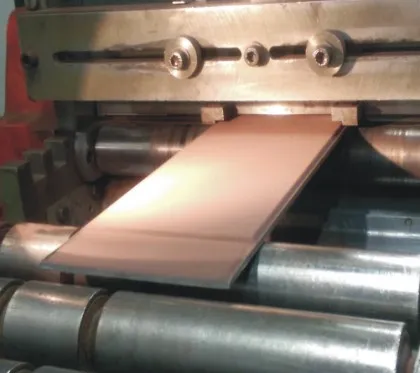
The continuous sintering process for bi-metal bearing strip production follows a well-established sequence. A low-carbon steel strip, typically SAE 1010 or 1020 grade, is first degreased and surface-prepared to ensure metallurgical bonding with the bronze layer. The prepared strip passes under a powder spreading station where the pre-alloyed bronze powder is deposited to a controlled thickness, typically 0.8 to 2.0 mm of loose powder that will densify to 0.3 to 1.0 mm after sintering and rolling. The loaded strip then enters a continuous mesh-belt furnace operating under a protective hydrogen or cracked-ammonia atmosphere. The furnace has distinct heating zones: a preheat zone to degas the powder and stabilise the atmosphere, a sintering zone at 780 to 850 degrees Celsius where densification occurs, and a controlled cooling zone. After the first sintering pass, the strip passes through a rolling mill that compresses the sintered layer to the target thickness and further densifies the microstructure. A second sintering pass follows, healing any microcracks introduced during rolling and completing the metallurgical bond between the bronze layer and the steel backing. The final strip is then coiled, ready for stamping and forming into finished bearing components. Line speeds vary from 0.3 to 2.0 metres per minute depending on the furnace length and the required sintered layer properties.
Lead-Free Bronze Alternatives: Alloy Systems and Trade-Offs
The removal of lead from bearing alloys creates a significant engineering challenge because no single element replicates all three tribological functions that lead provides. Several alloy systems have been developed as replacements, each with specific advantages and limitations. CuSn10Bi3 replaces lead with bismuth, which is similarly soft and immiscible in the copper-tin matrix. Bismuth provides comparable conformability and some embeddability, but it is more brittle than lead, and at higher concentrations can cause intergranular embrittlement. The bismuth content must be carefully controlled to avoid cracking during forming operations. CuSn8Ni1 relies on a hardened copper-tin-nickel matrix without a separate soft phase. Nickel strengthens the matrix and improves fatigue resistance, but the absence of a soft phase means reduced conformability and embeddability compared to leaded alloys. This system works best in applications with precise shaft alignment and clean oil systems. CuSn10 without any soft-phase addition offers good baseline wear resistance from the hard copper-tin matrix but requires the bearing design to compensate for the lack of conformability through tighter manufacturing tolerances and improved oil filtration. Some manufacturers add small amounts of solid lubricants such as graphite or MoS2 to the powder blend to partially restore the emergency lubrication function. The choice between these systems depends on the specific application requirements, the severity of operating conditions, and the lubrication regime.
Wear Performance and Bearing Grade Selection
Bearing grade selection involves matching the alloy composition, sintered layer thickness, overlay material and surface finish to the specific operating conditions of the application. For automotive engine main bearings and con-rod bearings, CuSn10Pb10 remains the standard where legislation permits, offering a proven balance of fatigue strength, wear resistance, conformability and corrosion resistance to acidic oil degradation products. The sintered bronze layer typically ranges from 0.3 to 0.5 mm on a 1.5 mm steel backing, with the bronze often electroplated with a lead-tin or bismuth-tin overlay that provides initial running-in conformability. For transmission bushings and industrial bearings operating at lower speeds and higher loads, thicker sintered layers of 0.5 to 1.0 mm are common, and higher lead contents may be specified. Wear testing according to standardised protocols allows direct comparison between alloy grades. Key metrics include the specific wear rate under a given combination of load, speed and temperature; the seizure load at which catastrophic failure occurs; the fatigue strength expressed as the maximum dynamic load the bearing can sustain for a specified number of cycles; and the corrosion resistance in standard oil-acid tests. MEPOSO works with bearing manufacturers to optimise powder specifications for each application, ensuring that the sintered layer delivers the target microstructure, porosity and mechanical properties required by the final bearing design.
Conformability, Embeddability and Fatigue Resistance
The three properties of conformability, embeddability and fatigue resistance form an interconnected triangle that bearing engineers must balance for each application. Conformability is the ability of the bearing surface to deform locally under load to accommodate shaft deflections, misalignment, edge loading and geometric imperfections. High conformability prevents localised overheating and premature fatigue cracking. In leaded alloys, the soft lead phase provides this compliance; in lead-free alloys, it must come from overlay coatings, reduced matrix hardness, or deliberate porosity in the sintered layer. Embeddability is the capacity of the bearing surface to absorb hard foreign particles without allowing them to damage the shaft or score the running surface. Lead excels at this because particles simply push into the soft lead phase and remain trapped. Without lead, overlay coatings of softer metals or polymer coatings serve this purpose. Fatigue resistance is the ability of the bearing to sustain cyclic loading without crack initiation and propagation through the bearing layer. Higher-tin bronzes like CuSn10 offer superior fatigue resistance due to their harder matrix, but this comes at the cost of conformability. The powder metallurgy approach allows fine-tuning of these properties through porosity control, precise alloy composition and controlled sintering parameters, which is why the powder specification plays such a critical role in final bearing performance.
Regulatory Landscape and the Drive Towards Lead-Free
The push towards lead-free bearing alloys is driven by multiple regulatory instruments. The EU End-of-Life Vehicles Directive (ELV, 2000/53/EC) restricts lead in vehicle components, though bearing applications have benefited from specific exemptions that are periodically reviewed. The EU REACH Regulation has placed lead on the Candidate List of Substances of Very High Concern (SVHC), which triggers supply chain communication obligations and may eventually lead to authorisation requirements. The RoHS Directive (2011/65/EU), while primarily targeting electrical and electronic equipment, influences broader industry attitudes towards lead elimination. Beyond Europe, China's environmental regulations, Japan's industrial standards favouring lead-free materials, and US EPA initiatives all contribute to global momentum. The practical implication for bearing manufacturers is clear: even where exemptions currently allow leaded alloys, the trend is towards elimination, and any new bearing design should seriously evaluate lead-free alternatives. This does not mean that CuSn10Pb10 will disappear overnight. Existing engine platforms with validated bearing systems will continue to use leaded alloys for the duration of their production life. However, new platform development increasingly specifies lead-free requirements from the outset. MEPOSO supplies both CuSn10Pb10 and lead-free bronze powders, providing bearing manufacturers with the flexibility to serve legacy and next-generation programmes from a single powder supplier based in Milano, Italy.
Powder Quality Control for Bearing Applications
Bearing manufacturers require a level of powder consistency that exceeds general powder metallurgy standards because even small batch-to-batch variations in particle size, apparent density or chemical composition translate directly into variations in sintered layer thickness, porosity, hardness and ultimately bearing performance. The quality control regime for bearing-grade bronze powders at MEPOSO includes chemical analysis by ICP-OES for all alloying elements and critical impurities such as iron, aluminium and phosphorus; particle size distribution by laser diffraction with reporting of D10, D50 and D90 values; sieve analysis to verify the absence of oversize particles that would create surface defects; apparent density measurement by Hall flowmeter according to ISO 3923; flow rate measurement to confirm consistent powder delivery characteristics; and microscopic examination of particle morphology to verify that the atomisation process has produced the irregular, dendritic shapes required for good green strength and sintering activity. Every production batch is accompanied by a certificate of analysis traceable to calibrated instruments and reference standards. For bearing customers running high-volume continuous sintering lines, consistency between batches is as important as meeting the specification on any single batch, because process adjustments for powder variation cost production time and risk scrap. MEPOSO maintains tight process controls during atomisation and classification specifically to minimise batch-to-batch variability for bearing strip producers.
MEPOSO Bronze Powders for Bearing Strip Production
MEPOSO manufactures pre-alloyed bronze powders for bearing strip production at its facility in Milano, Italy, with the atomisation, classification and quality control infrastructure needed to serve demanding bearing customers worldwide. The product range includes CuSn10Pb10 in multiple particle size cuts optimised for different sintering line configurations and target layer thicknesses; CuSn10Bi3 as the primary bismuth-based lead-free alternative; CuSn8Ni1 for applications requiring enhanced fatigue resistance; and CuSn10 as a base alloy for customers who add their own solid lubricant blends. Each grade is produced under controlled atomisation conditions that deliver consistent particle morphology, narrow composition tolerance and reproducible sintering behaviour. MEPOSO provides full technical support including assistance with sintering parameter optimisation, metallurgical analysis of sintered samples, and collaborative development of custom alloy compositions for specific bearing applications. For bearing manufacturers evaluating new powder sources or transitioning from leaded to lead-free alloys, MEPOSO offers trial quantities with full documentation, enabling qualification testing on customer production lines with minimal risk. All shipments include a comprehensive certificate of analysis, and long-term supply agreements with fixed specifications ensure that validated bearing systems continue to receive consistent powder throughout their production lifetime.
Contact MEPOSO for pre-alloyed bronze powders for bi-metal bearing strip production, including CuSn10Pb10 and lead-free alternatives, with full technical documentation and batch traceability.