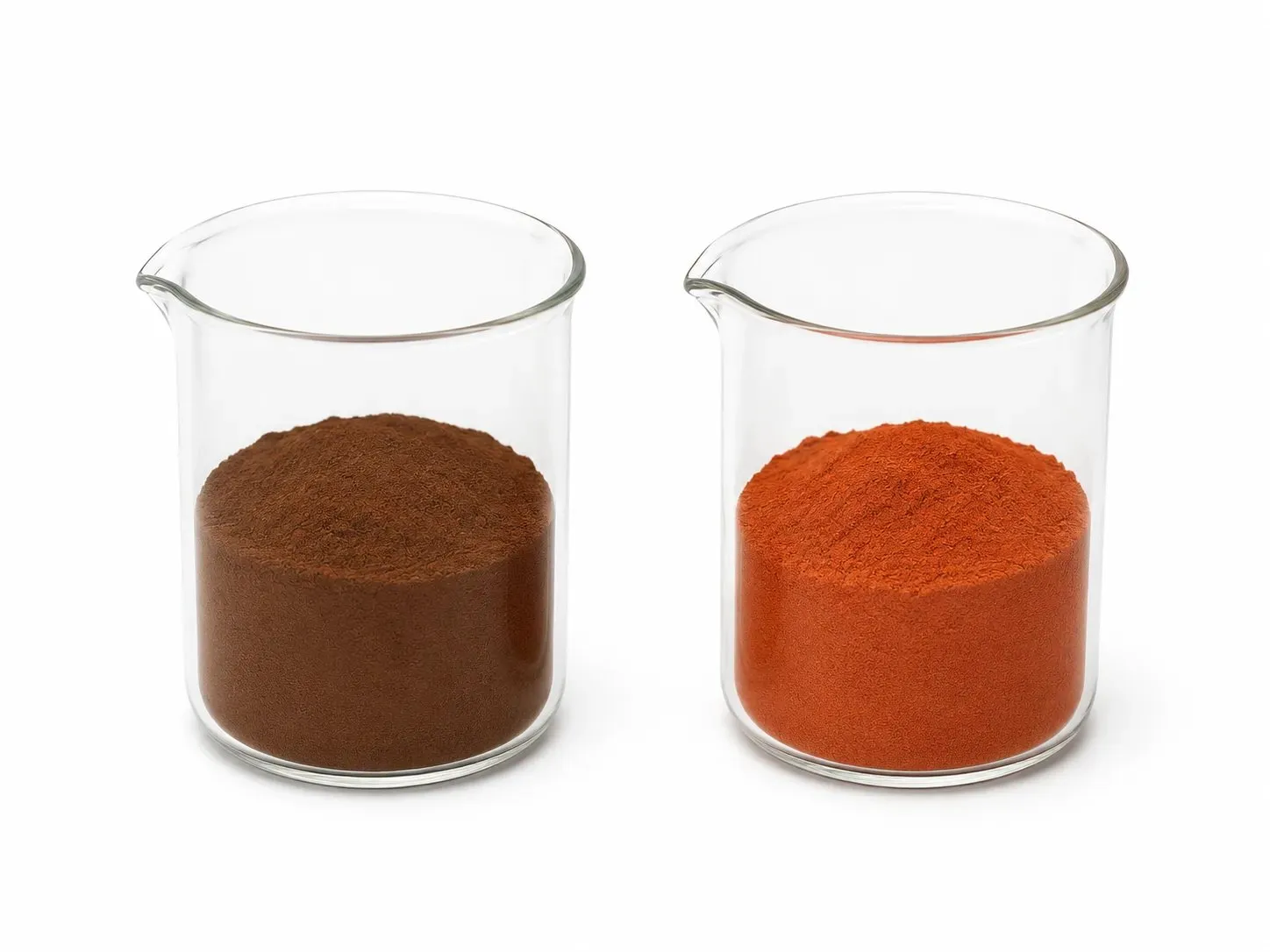
Additive manufacturing (AM) of metal components has moved from laboratory curiosity to industrial production reality in aerospace, medical devices, automotive and tooling sectors. However, the transition from prototyping to serial production has exposed how demanding AM processes are regarding powder quality. Unlike conventional powder metallurgy, where the pressing operation can compensate for some powder variability, AM processes such as selective laser melting (SLM), electron beam melting (EBM) and directed energy deposition (DED) require powder feedstocks that meet tight specifications on every measurable parameter. For suppliers of atomized metal powders, the AM market represents both a significant commercial opportunity and a demanding technical challenge. MEPOSO, based in Milano, Italy, works with AM equipment users and research institutions to evaluate how atomized copper and alloy powders perform in additive processes, and to define the powder specifications that deliver reliable, reproducible build results.
SLM and EBM Requirements: What the Machine Demands from the Powder
Selective laser melting (SLM) and electron beam melting (EBM) are powder bed fusion processes where thin layers of powder are spread across a build platform and selectively melted by a focused energy source. The quality of each layer depends directly on how uniformly the powder spreads, which in turn depends on particle morphology, size distribution and flowability. SLM typically uses 15-45 micrometre or 20-63 micrometre powder fractions with a recoater blade or roller that demands highly flowable, spherical particles to create uniform layer thickness of 20-50 micrometres. Any deviation in powder spreading - caused by satellites, agglomerates, irregular particles or poor flow - creates defects in the melt pool that propagate through the entire build height. EBM operates under vacuum and uses a broader particle size range (45-106 micrometres) with less stringent sphericity requirements because the powder is lightly sintered before melting. However, EBM demands very low oxygen content because the vacuum environment cannot tolerate degassing from oxide-contaminated powder. Both processes require apparent density above 4.0 g/cm3 for copper-based powders to ensure consistent volumetric dosing. Flowability measured by Hall funnel should be below 30 seconds per 50 grams, with the best AM-grade powders achieving 20-25 seconds. These specifications effectively mandate gas atomization as the production route, because only gas atomization consistently delivers the combination of sphericity, low oxygen and tight size distribution that powder bed fusion requires.
Sphericity and Satellite Control: The Quality Differentiators
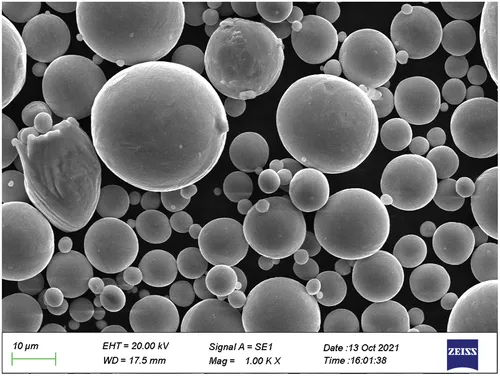
Sphericity is not a binary property - it exists on a spectrum, and the degree of sphericity required depends on the specific AM process and machine platform. Circularity and aspect ratio measurements from dynamic image analysis (DIA) or scanning electron microscopy (SEM) are the standard methods for quantifying sphericity. AM-grade powders typically require average circularity above 0.90 (where 1.0 is a perfect circle) with no more than 5% of particles below 0.80 circularity. Satellite particles - small particles adhered to the surface of larger particles during atomization - are a particular concern because they degrade flowability without being detected by standard particle size analysis. Satellites increase the effective surface area, create irregular flow behaviour and can break loose during handling, generating fines that shift the particle size distribution. Advanced atomization techniques, including optimized nozzle geometry, gas flow management and post-atomization classification, can reduce satellite formation. However, eliminating satellites entirely remains technically challenging. Powder buyers for AM applications should request SEM images as part of the incoming material qualification rather than relying solely on numerical PSD data. MEPOSO provides SEM documentation upon request and works with customers to define morphology acceptance criteria that reflect the actual demands of their specific AM process.
Oxygen Content: The Hidden Variable in AM Part Quality
Oxygen dissolved in the metal powder or present as surface oxides has a direct and measurable impact on AM part quality. During the melting process, oxygen reacts with alloying elements to form oxide inclusions that act as stress concentrators and crack initiation sites within the solidified material. For copper and copper alloys processed by SLM, this effect is particularly pronounced because copper's high thermal conductivity already makes full melting challenging, and oxide contamination further reduces the melt pool's ability to wet and fuse adjacent tracks. Typical maximum oxygen specifications for AM-grade copper powders are 0.02% to 0.05%, measured by inert gas fusion analysis. Exceeding these limits results in increased porosity, reduced ductility and lower electrical conductivity in the finished part. Oxygen pickup does not occur only during atomization - it also occurs during powder handling, storage, recycling and sieving operations. Every time powder is exposed to air, the oxide layer grows incrementally. This means that even a powder with excellent initial oxygen levels can degrade if storage and handling protocols are inadequate. Sealed packaging under inert atmosphere, dedicated handling equipment and controlled recycling procedures are essential components of an oxygen management strategy for AM production. MEPOSO provides powders in sealed containers with inert gas backfill and includes oxygen analysis data in every certificate of analysis.
Copper and Copper Alloys in AM: Specific Challenges
Processing pure copper and copper alloys by laser-based AM presents unique challenges compared to more commonly processed materials such as stainless steel, titanium and nickel alloys. Copper's high reflectivity at the 1064 nm wavelength used by conventional fibre lasers means that most of the laser energy is reflected rather than absorbed, making it difficult to achieve sufficient energy density for full melting. This has driven the development of green lasers (515 nm) and blue lasers (450 nm) where copper's absorptivity is significantly higher. Pure copper also has extremely high thermal conductivity (approximately 400 W/m-K), which causes rapid heat dissipation from the melt pool, making it difficult to maintain a stable melt pool geometry. The result is that parameter windows for copper AM are much narrower than for steel or titanium, and process stability is more sensitive to powder quality variations. Copper alloys such as CuCr1Zr, CuNi2SiCr and bronze compositions offer improved processability because the alloying elements reduce reflectivity and thermal conductivity while potentially improving mechanical properties. However, these alloys require precise powder chemistry control to maintain the specified composition within tight tolerances. MEPOSO is actively developing gas-atomized copper and copper alloy powders optimised for AM applications, working with equipment manufacturers and end users to validate performance in real production environments.
Powder Recycling and Lifecycle Management in AM Production
In production-scale AM operations, only 5-15% of the powder in the build chamber is actually melted into parts during each build cycle. The remaining 85-95% is recovered, sieved and returned to the powder supply for subsequent builds. This recycling process is economically necessary given the high cost of AM-grade powders, but it introduces quality management challenges that directly affect part consistency. Each recycling pass exposes the powder to elevated temperatures (from the build environment and nearby melt pools), oxygen pickup, mechanical degradation from handling and sieving, and potential cross-contamination. Over multiple recycling passes, the particle size distribution shifts as fines are generated and satellites are broken off. Oxygen content increases incrementally, and some particles develop surface discolouration indicating thermal exposure. Effective powder lifecycle management requires defining clear acceptance criteria for recycled powder, including maximum allowable oxygen pickup per cycle, PSD limits, flowability thresholds and a maximum number of permitted recycling passes. Some operations blend recycled powder with fresh virgin material at controlled ratios to maintain consistent properties. MEPOSO supports AM production facilities in developing powder management protocols by providing baseline characterisation data for virgin powder and offering re-analysis services for recycled material to track property changes over multiple build cycles.
Qualification Challenges: From Sample to Serial Production
One of the most significant barriers to broader adoption of AM in industrial production is the qualification process. Unlike conventional manufacturing where process qualification is well established, AM qualification must validate the complete chain: powder specification, machine parameters, build orientation, post-processing and final part properties. Changing any single variable - including the powder supplier - typically requires re-qualification, which can take months and cost tens of thousands of euros in testing, machine time and engineering resources. This creates a practical lock-in effect where the first powder supplier to successfully qualify with an AM user has a significant competitive advantage. For new powder suppliers entering the AM market, this means that technical performance alone is insufficient. The supplier must also demonstrate batch-to-batch consistency over extended production periods, provide comprehensive documentation that supports the customer's quality management system, and commit to maintaining the qualified powder specification without change for the duration of the supply agreement. MEPOSO approaches AM qualification by establishing detailed powder specifications jointly with the customer before the first sample shipment, conducting parallel characterisation at MEPOSO's laboratory and the customer's facility, providing complete batch traceability from raw material to finished powder, and maintaining statistical process control data that demonstrates long-term consistency. Contact MEPOSO to discuss powder development for additive manufacturing, trial sample requirements, or long-term supply qualification for AM production.
Contact MEPOSO to discuss metal powder development for additive manufacturing, request trial samples for AM process validation, or explore long-term supply qualification for serial AM production.