Additive manufacturing powders are often discussed in terms of alloy, but dimensional and morphological control is just as decisive. In powder bed fusion, the powder has to spread evenly, deliver a dense enough layer and keep that behaviour over many cycles, including reuse loops. This is why particle size distribution and particle shape are not just lab data: they are practical process variables linked to flowability, packing and build reliability.
Particle size distribution affects spreading and packing
If the powder cut is too broad or drifts during reuse, the layer can spread less uniformly and packing density can vary. That variation matters because porosity risk, melt behaviour and dimensional consistency all start from the quality of the deposited layer. For buyers and process teams, particle size control is therefore tied directly to repeatable production, not only to a specification sheet.
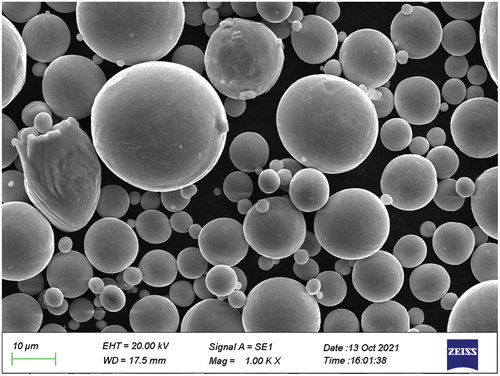
Particle shape influences flowability and reuse decisions
Highly spherical particles are usually associated with more regular flow, but real industrial lots may include satellites, irregular particles or morphology shifts after repeated exposure to the process. Monitoring shape helps distinguish whether the powder still behaves like a qualified lot or whether reuse is beginning to introduce risk. This is why morphology review supports both supplier qualification and internal powder management.
Characterization data should guide atomization and quality strategy
Measurement is useful only if it feeds decisions. When size and shape analysis shows drift, the response may involve atomization tuning, tighter incoming control, separate reuse windows or revised acceptance criteria. In other words, characterization becomes valuable when it helps keep the powder route commercially viable and technically repeatable across production, not when it remains an isolated report.
MEPOSO can support technical discussion on particle size, morphology and powder repeatability for additive manufacturing evaluations.